I am having dinner with my partner and a close friend, and I make a clumsy mistake. I knock a water glass across the table, or I say something awkward that causes an uncomfortable pause in the conversation. In half a second, heat rushes into my chest. My neck flushes red, my throat tightens, and my eyes drop to the floor.
In that split second, I have a choice. I can resist the heat, contract inward, and conclude that I am fundamentally broken or unwanted. Or I can take a breath, let the warmth be there, and recognize that the physical sensation in my chest is simply the raw biological cost of caring about connection.
Shame, embarrassment, awkwardness, and love all exist along a single physiological spectrum. When you understand how this spectrum works in your body, you stop treating your shame as a personal defect and begin to see it as an invitation toward deeper self-respect.
The Physical Spectrum from Awkwardness to Love
When I look at how shame and love feel in my actual body, the physical signals are almost identical:
- Awkwardness and Embarrassment: You say something clumsy in a group meeting. Your face heats up, you laugh nervously, and you look around to see if anyone noticed. This is mild nervous system activation. It is your body telling you that social belonging matters to you.
- Acute Shame and Resistance: When you fight the awkwardness, your mind adds an immediate verdict: “I should not be here. There is something wrong with me.” You pull backward into hiding, attack yourself with sharp criticism, or act out defensively to prove you are worthy.
- Surrender and Humility: If you allow the sensation to pass through you without adding a verdict, the sharp sting softens. You realize you made an ordinary mistake. You do not need to puff yourself up or disappear into the floor. You are simply human among other humans.
- Connection and Love: When you stay present with an open chest, the same heat that felt like burning shame becomes warm affection. You are able to look at another person, see their struggles, and care about them without demanding perfection from yourself.
“When I accept the heat in my chest instead of running from it, what felt like shame softens into honest self-respect.”
How Different Personality Strategies Cope with Shame
In the Enneagram, the Heart Center types manage the feeling of shame through distinct nervous system strategies:
Fawn Strategy (Enneagram 2)
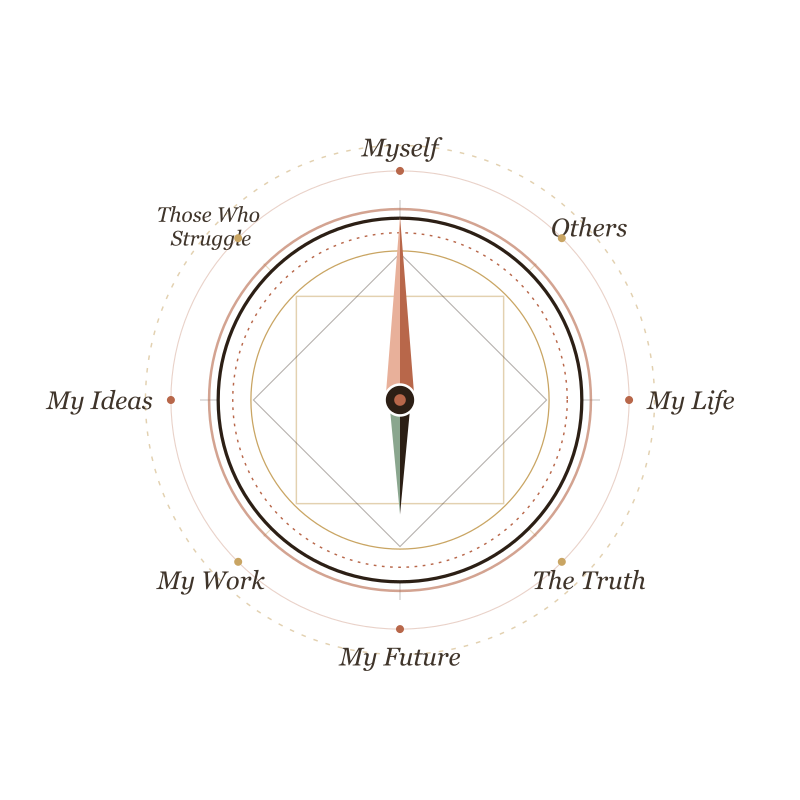
When people who lean into Enneagram 2 feel shame, they manage it by moving toward others. They try to make themselves indispensable, anticipating what others need before anyone asks. The internal script says: “If I help you enough, you will never see that I feel unworthy.” Surrendering this pattern allows genuine care through the practice of Love for Those Who Struggle.
Fight Strategy (Enneagram 3)
When people using an Enneagram 3 strategy encounter shame, their nervous system fights back through performance and achievement. They produce awards, polished resumes, and constant work to prove they are valuable. The script says: “If I win, I cannot be ashamed.” Letting go of this pressure brings humble devotion through Love for Your Work.
Freeze Strategy (Enneagram 4)
When an Enneagram 4 strategy activates, the nervous system freezes. You pull away into isolation, nursing your wounds and believing that your flaws make you permanently different from everyone else. The script says: “I will reject the group before the group rejects me.” Surrendering this isolation allows grounded self-respect through Love for Yourself.
Flight Strategy (Social Instinct)
In the Social Instinct, shame is managed by fleeing from isolation through social scanning and compliance. You adapt your clothing, your voice, and your beliefs to match the hierarchy of the room. Surrendering social anxiety opens the door to honest contribution through Love for Ideas.
3 Ways to Move from Shame to Love in Everyday Moments
You do not need to eliminate shame to live a good life. You only need to change how you meet the physical feeling when it surfaces:
- Locate the physical sensation without telling a story about it. When you feel rejected or embarrassed, notice what happens in your body. Is your stomach tight? Is your chest hot? Keep your attention on the raw temperature and pulse for thirty seconds instead of repeating words like “I ruined everything.”
- Drop the comparison. Shame lives on comparison: thinking you are either flawed or needing to prove you are superior. Notice when your mind measures your worth against a colleague or friend. You can take a breath and let both of you simply be.
- Offer yourself the kindness you would give to a good friend who is hurting. When you make a mistake, notice the tone of voice you use in your own head. Speaking gently to yourself in the middle of a blunder is where integrity begins.
How do you typically react when awkwardness or shame arrives? (check all that apply)
Shame And Love Match
Check off statements above to calculate your match score.
Practicing Self-Respect with Blunders
Think of a recent moment where you felt deeply awkward, clumsy, or ashamed. If you stripped away all the self-criticism, what was the underlying care or desire you had in that moment?
From My Book The Age of Self-Realization
“Surfing online, I searched for answers. I remember getting an email from what turned out to be a cult. They told me that I had the rarest personality type in the world, and that less than one percent of the population shared my mind. But they also said I was broken, that my energy was wrong, and that they could help me find the way back to who I was meant to be.
I realized then and there that every insecurity I have could be manipulated or used against me. For a long time, I had swung between two extremes:
1. Somebody special, meant to save the world on a unique quest.
2. A broken misfit, doomed to never fit in anywhere.I saw myself as a diamond hidden underneath a rock. I thought I just had to cut away all the ugly parts to eventually reveal my inner shine. But cutting away or repressing parts of myself was not authentic. I was not an invulnerable diamond; I was a simple flower. What I really needed was nourishment, support, and the right environment.”
Erik Thor, The Age of Self-Realization, Chapter on Love for Yourself
Preorder The Age of Self-Realization
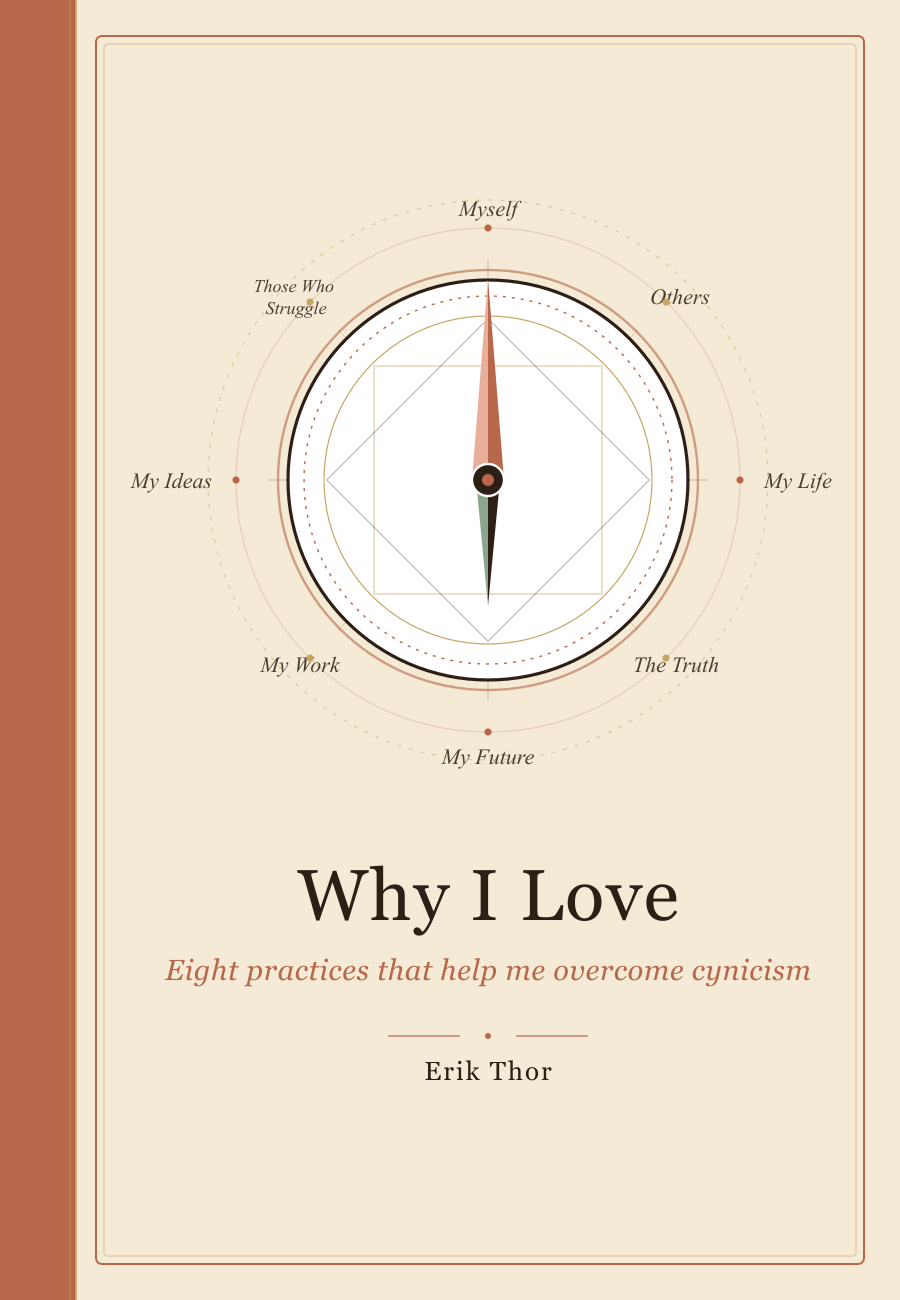
If you resonate with this journey of moving from painful isolation and harsh self-criticism to quiet integrity and self-compassion, explore my first book, The Age of Self-Realization (also available as Why I Love). It shares eight grounded life practices for overcoming cynicism, befriending your emotions, and living with honest self-respect.

Explore Related Nervous System and Emotional Strategies
To understand how your nervous system processes emotional energy across all domains, explore the companion guides:
- Why We Freeze When Emotions Feel Overwhelming (How Type 4, 5, and 9 withdraw)
- How the Fight Response Protects Against Vulnerability (How Type 3, 6, and 8 lean in)
- Why the Flight Response Keeps Us Moving and Planning (How Type 1, 7, and SO stay ahead of distress)
- How the Fawn Response Uses Pleasing to Stay Safe (How Type 2 and SP accommodate)
- How Anxiety and Excitement Are the Same Physical Sensation
- Why Anger and Passion Are Two Sides of the Same Body Signal
Share

Loading discussion…