I am standing backstage right before I give a talk, or I am sitting at my kitchen table before a difficult phone call. My pulse jumps to ninety beats a minute. A fluttering sensation spreads through my stomach, my hands get cold, and my breath sits shallow in my upper chest.
If I tell myself, “This means something bad is about to happen,” the fluttering becomes suffocating anxiety. My mind begins generating emergency scenarios, scanning for exits, or trying to memorize every word so I do not look foolish.
If I pause, look at my shoes, and tell myself, “My body is simply gathering energy because this moment matters to me,” the exact same fluttering turns into aliveness. The adrenaline stops feeling like an enemy and begins feeling like alertness.
Anxiety and excitement share the exact same physical energy, separated only by how you interpret the surge: through resistance or through surrender.
The Physical Spectrum from Restlessness to Clarity
When adrenaline enters the bloodstream, your body does not know the difference between anticipation and fear. It only knows that you are paying attention:
- Restlessness and Unease: You feel a slight hum of tension in your legs and belly. Your fingers reach for your phone, or you start checking your calendar repeatedly. This is mild nervous system arousal preparing you for action.
- Acute Anxiety and Resistance: When you fight the alertness, you demand absolute certainty before taking a step. Your mind creates stories of inadequacy, betrayal, or missed opportunities. You attempt to control the future to make the sensation go away.
- Surrender and Presence: When you stop fighting the bodily hum, you give up the demand for total certainty. You accept that you cannot predict the next twenty minutes, and you let your feet stay planted on the floor right now.
- Courage and Aliveness: With an open body, the alertness gives you focus and vitality. You speak clearly, solve problems with interest rather than dread, and discover that you are capable of meeting whatever arrives.
“When I stop demanding that the future be guaranteed, the tight adrenaline in my stomach softens into quiet alertness.”
How Different Personality Strategies Cope with Anxiety
The Head Center in the Enneagram is built around how people respond to internal fear and anxiety:
Freeze Strategy (Enneagram 5)
When people leaning into an Enneagram 5 strategy feel anxiety, they manage it by withdrawing. They retreat into books, screens, or private hobbies, convinced they lack the physical energy to handle the outside world. The script says: “If I stay inside my head, no one can drain me.” Surrendering this fear opens up practical wisdom through Love for the Truth.
Fight Strategy (Enneagram 6)
When an Enneagram 6 strategy turns on, anxiety is met with defensive vigilance. You scan every conversation for hidden motives, test people’s loyalty, or rehearse emergency plans. The script says: “If I expect the worst, I will never be blindsided.” Releasing this suspicion brings steady confidence through Love for Life.
Flight Strategy (Enneagram 7)
When an Enneagram 7 strategy activates, the nervous system flees internal restlessness by running toward novel experiences, future plans, and positive reframing. The script says: “If I keep moving and laughing, the dread can never catch me.” Slowing down to savor what is already here reveals lasting contentment through Love for Life.
Fawn Strategy (Self-Preservation)
In the Self-Preservation Instinct, anxiety centers around physical vulnerability, resources, and discomfort. You soothe anxiety by micro-managing routines, nestling into comfortable spaces, or avoiding physical disruption. Surrendering the demand for total comfort allows vibrant aliveness through Love for Life.
3 Ways to Move from Anxiety to Excitement in the Body
You cannot talk yourself out of anxiety using the same intellect that invented the fear. You regulate it through physical action:
- Lengthen your exhale. When you are anxious, you breathe high in your chest. Inhale slowly through your nose for four counts, and breathe out through your mouth for six counts. Doing this three times tells your nervous system that you are not being chased by a predator.
- Name the sensation without the conclusion. Instead of thinking, “I am panicking,” say to yourself: “My pulse is fast and there is tingling in my fingers.” Describing physical sensations neutralizes the catastrophic conclusions your brain wants to draw.
- Take one small concrete action in the room. Anxiety thrives in mental abstraction. Stand up, wash a dish, walk around the block, or write one sentence on paper. Physical movement gives the adrenaline a healthy outlet to do work.
How do you typically react when nervous system tension spikes? (check all that apply)
Share your match percentage in the comments or post your custom results image to social media.
Reframing Bodily Alertness
Think of a situation coming up this week that makes your stomach flutter with dread. What would happen if you treated that fluttering as simple biological energy ready to help you, rather than a prediction of failure?
From My Book The Age of Self-Realization
“For years, I wondered how it was possible that, with so many fascinating sensations around me, I didn’t feel an endless desire to experience life head-on. To explore, touch, move, and dance in the face of shifting lights, roads, textures, and sounds.
When my parents divorced, I detached. When you detach, you look down, you avoid, and you stop noticing the everyday beauty around you. I developed an addiction to comfort, spending days locked in my room in front of a computer screen.
One afternoon, when I was fifteen, I looked up at the sky. The clouds, the sun, the apple tree in the yard. It was beautiful. At that moment, I realized that the natural world around me was already full of wonder. Why was I spending my days completing virtual quests inside a dark room when there was an entire world to explore outside? Savoring life doesn’t come from outrunning limitation; it comes from looking up and being here.”
Erik Thor, The Age of Self-Realization, Chapter on Love for Life
Preorder The Age of Self-Realization
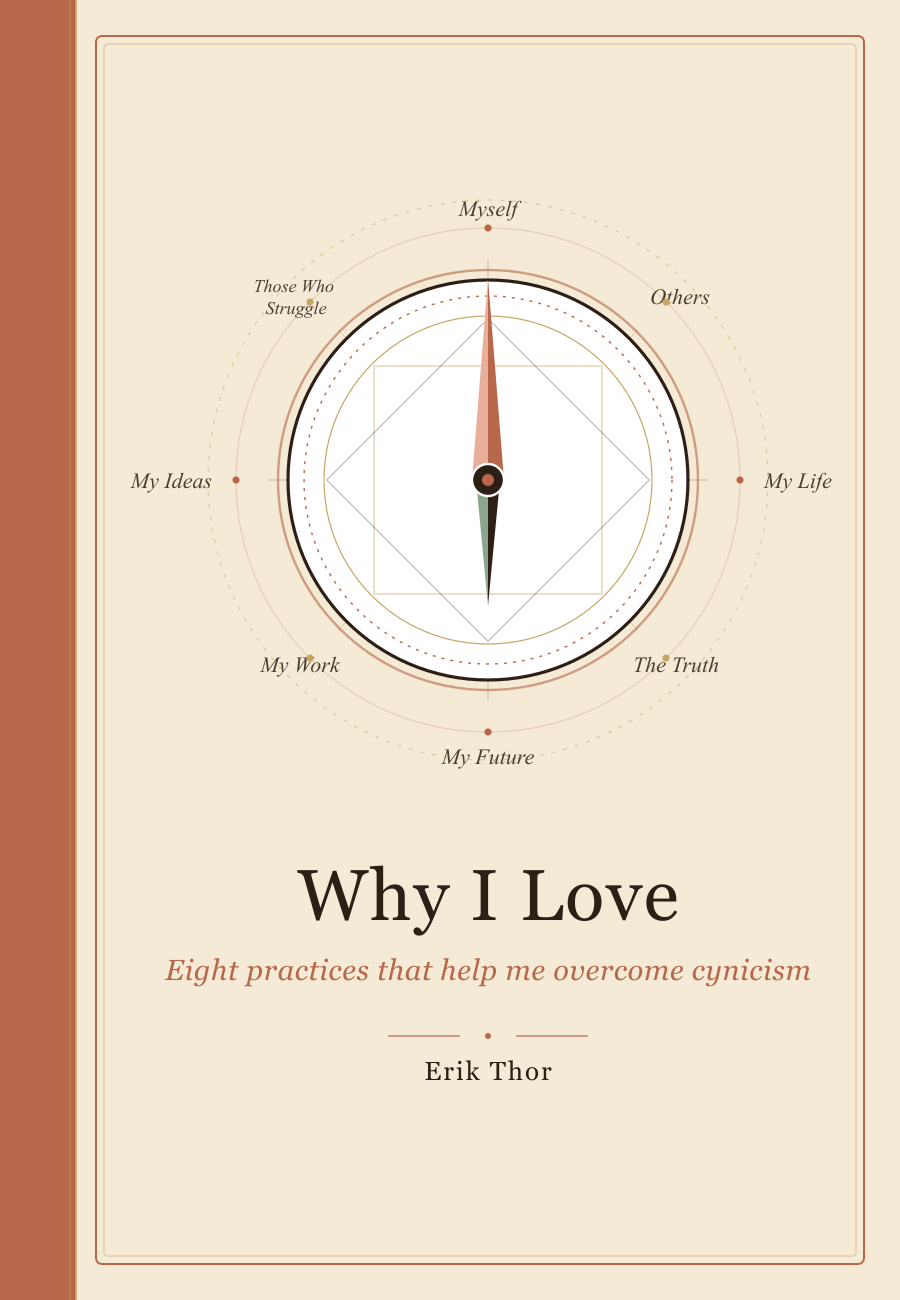
If you resonate with this journey of moving from exhausting anxiety, mental panic, and control habits to grounded presence and joy, explore my first book, The Age of Self-Realization (also available as Why I Love). It shares eight grounded life practices for overcoming cynicism, befriending your emotions, and engaging with reality.
Explore Related Nervous System and Emotional Strategies
Learn how your nervous system navigates other emotional energies:
- Why We Freeze When Emotions Feel Overwhelming (How Type 4, 5, and 9 withdraw)
- How the Fight Response Protects Against Vulnerability (How Type 3, 6, and 8 lean in)
- Why the Flight Response Keeps Us Moving and Planning (How Type 1, 7, and SO stay ahead of distress)
- How the Fawn Response Uses Pleasing to Stay Safe (How Type 2 and SP accommodate)
- How Shame and Love Share the Same Physical Response
- Why Anger and Passion Are Two Sides of the Same Body Signal
Share

Loading discussion…