Do you ever find yourself working late into the night, skipping lunch or pushing through exhaustion just to make sure a project looks exceptional and commands respect? That is what happens when you rely on an Enneagram 3 strategy.
Rather than a fixed identity of being an “achiever,” Enneagram 3 is an adaptive behavioral strategy. When you use this pattern, you manage Heart Center shame through a Fight response. When feelings of inadequacy surface, you fight back by outworking everyone, polishing your public image, and proving your worth through visible results.
How Your Nervous System Reacts with Fight and Shame
When you feel vulnerable to failure or worry that others might look down on you, your nervous system does not push you to withdraw into isolation or fawn over others. Instead, it triggers a Fight response. You channel that internal tension into ambitious productivity, strategic optimization, and competitive drive.
Beneath this drive is often a quiet, defensive belief: “I deserve better than others because I produce more. I am only as worthy as my latest success.”
This coping mechanism offers a clear temporary benefit: winning and excelling temporarily numbs the ache of shame with external validation. But it creates a profound internal cost. When you equate your worth with your output, you can easily develop a sense of entitlement or vanity to shield yourself from self-doubt. You might find it terrifying to slow down, rest, or admit a struggle, because if you aren’t winning, the old feelings of inadequacy come rushing back. You end up exhausting yourself performing for an audience, leaving your real, imperfect self feeling unacknowledged.
How You Move from Entitlement to Humility
The intensity of your Fight response shifts depending on whether you resist your vulnerability or allow yourself to be human:
- Entitlement and Vanity: When you fight your shame by proving superiority, you feel an urgent need to be the exceptional one in the room. You can become dismissive of slower colleagues, obsessed with metrics and credentials, and irritated by anything that tarnishes your image. You tell yourself that your high performance gives you the right to cut corners or demand special treatment.
- Restless Performance: You feel a sharp sting of anxiety when a colleague gets praised or when a goal falls behind schedule. The Fight response kicks in: you double down, refine your presentation, and hide any signs of fatigue. You can recognize that you are performing, yet you feel unable to step off the treadmill.
- Humility and Mastery: When you surrender the need to prove you are better than others, your natural drive transforms into quiet craftsmanship. You pursue excellence because you care about the work itself, not because you need applause to survive. You can celebrate other people’s successes without feeling diminished, and you can share your real struggles without shame.
Moving from Image to Real Craft
Practicing Love for Your Work means learning to find freedom through chosen responsibility rather than chasing external praise:
- Notice when work becomes a performance. Pay attention to the physical sensations of being wired, frantic, or hollow after completing a major task. Taking a moment to pause gives you space to ask: “Am I doing this because it genuinely matters to me, or am I doing it to be admired?”
- Give yourself permission to do something unmeasured. Spend an hour on a hobby, a walk, or a personal experiment where there are no scores, no social media updates, and no audience. Realizing that you exist and have value without being evaluated dismantles the pressure to perform.
- Practice sharing an unpolished struggle. Talk to a friend or coworker about a mistake you made or a challenge you haven’t solved yet without spinning it into a triumphant lesson. Experiencing connection when you are not shining proves that you are worthy of respect even when you fail.
You know you use an Enneagram 3 strategy when… (check all that apply)
Enneagram 3 Match
Check off statements above to calculate your match score.
What It Feels Like in Real Life
I’m working on a project that is due tomorrow morning. The core work is already solid and functional, but it’s 11 PM and I’m still at my desk, tweaking the visual layout, rewriting the headline for the fourth time, and trying to make sure it looks completely flawless.
My internal narrative is that I’m just maintaining high standards. But beneath that perfectionism is a sharp, quiet panic: if this presentation is just ordinary, people will realize that I’m just ordinary. By midnight, I’ve produced something impressive that everyone compliments the next morning. But walking away from the meeting, I feel a familiar numbness. The audience applauded the mask, but nobody actually saw me.
A Question for You
Where in your life are you currently working to be admired rather than because you love the work? What would happen if you allowed your effort to be simple and ordinary today?
From My Book The Age of Self-Realization
“At times, I found my job unimportant and meaningless. When I worked in customer service, I often thought I was doing something beneath me. I told myself I deserved better, that I was supposed to do something more with my life.
At the same time, as soon as the phone rang, I was excited. I was curious about who was on the other end of the line and what their issue would be. When something went wrong with a delivery or with logistics, I was the first one to jump at the solution. I loved the big problems. I loved working on complex insurance cases and damages. I found that genuinely stimulating.
The part of me that found the work frustrating kept getting overruled by the part of me that found it fascinating. Play doesn’t have to be carefree or relaxed. You can give your all to an activity, take it 100% seriously, and still be playing. I’m playing when 100% of my attention is directed at a task, and I start to lose track of time.”
Erik Thor, The Age of Self-Realization, Chapter on Love for Your Work
Preorder The Age of Self-Realization
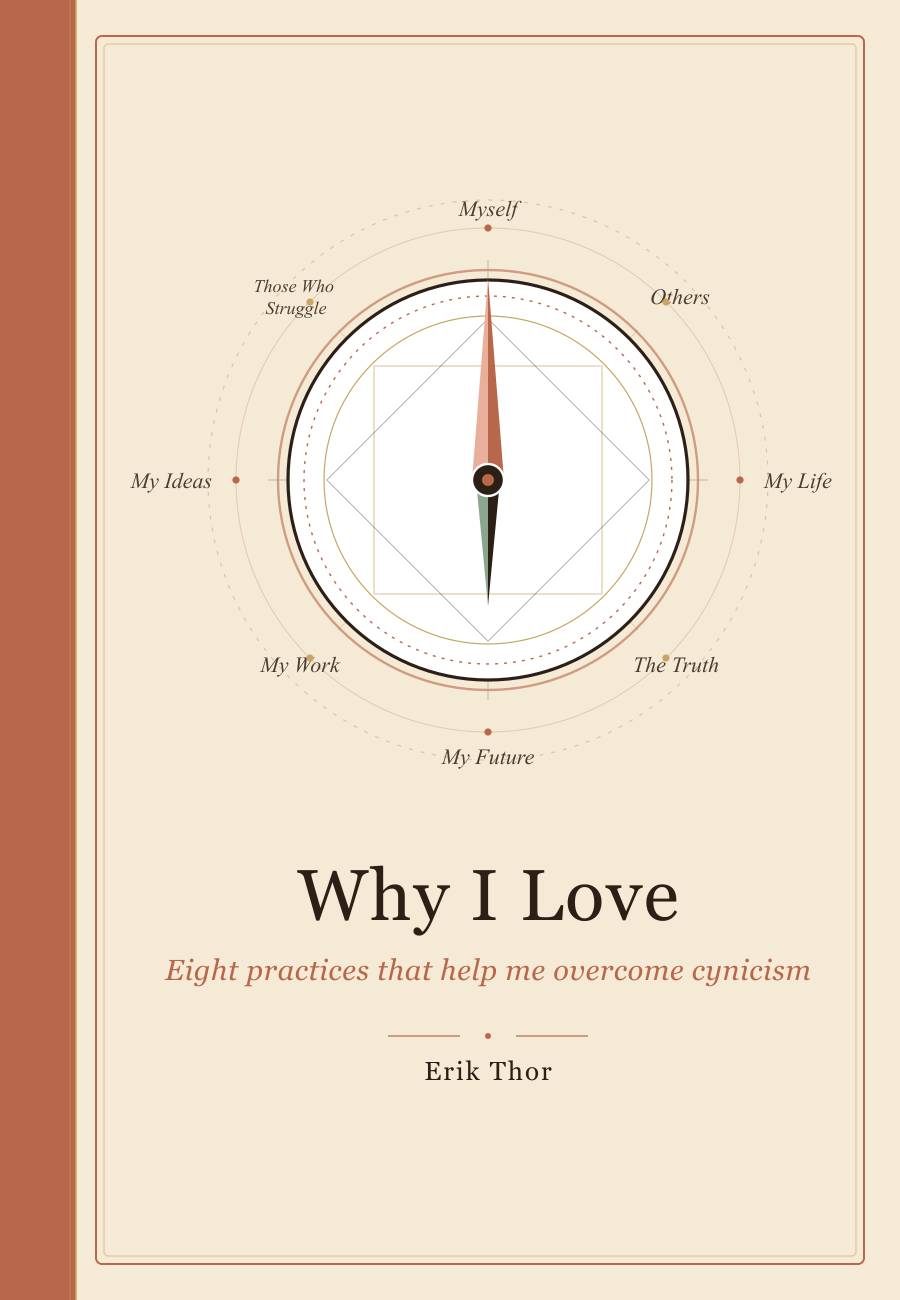
If you resonate with this journey of moving from the exhausting treadmill of status and external applause to the grounded joy of real craftsmanship, explore my first book, The Age of Self-Realization (also available as Why I Love). It shares eight grounded life practices for overcoming cynicism, befriending your emotions, and discovering freedom in your daily work.
Share

Shareable Reflection Card
Here is a simple reflection on the Enneagram 3 strategy, formatted to share with others:
The Enneagram 3 Reality
The Habit: “If I outwork everyone and win, I will never have to feel inadequate.”
The Nervous System: “A Fight response that defends against Heart Center shame through relentless performance.”
The Shift: “Move from entitlement to humility by enjoying the quiet satisfaction of craftsmanship.”
Caption for Sharing:
When you push through exhaustion to make every slide deck and project look flawless, you are not just ambitious. You are using an Enneagram 3 strategy, a Fight response that tries to outwork shame with external accolades. Real self-respect begins when you allow your effort to be simple, human, and ordinary.
#Enneagram3 #FightResponse #Perfectionism #SelfWorth #WorkplaceWellness #Personalitopia