Have you ever felt an urgent restlessness when life begins to feel repetitive, heavy, or boring, instantly opening ten browser tabs, planning a new trip, or dreaming up a new project to stay energized? That is what happens when you rely on an Enneagram 7 strategy.
Rather than a permanent identity of being an “optimist” or an “explorer,” Enneagram 7 is an adaptive coping pattern. When you use this strategy, you manage Head Center anxiety through a Flight response. When boredom, grief, or confinement threatens your peace of mind, you sprint forward into future possibilities, reframing every negative into an exciting adventure.
How Your Nervous System Reacts with Flight and Anxiety
When emotional pain, routine obligations, or quiet sadness arise, your nervous system does not push you to freeze up or fight the room. Instead, it triggers a rapid Flight response. You pivot your attention forward into novelty, brainstorming new ventures and keeping your options wide open.
Beneath this rapid momentum is often a defensive belief: “If I stop moving, I will get trapped in pain and limitation. I must keep things exciting to stay free.”
This coping mechanism provides an immediate burst of relief: anticipating future fun stimulates dopamine and numbs the ache of sadness or restriction. But the trade-off is chronic restlessness. When you constantly jump to the next new idea the moment the initial buzz fades, you never stay long enough to see your ideas through to fruition. You can end up feeling scattered, skimming the surface of life, and avoiding the quiet depth that only comes from finishing what you start.
How You Move from Restlessness to Enthusiasm
The intensity of your Flight response shifts depending on whether you flee from discomfort or allow yourself to stay present:
- Restless Distraction and Avoidance: When you fight your anxiety by frantically outrunning pain, you become hyperactive and scattered. You over-schedule your calendar, jump from one half-baked project to the next, and dismiss real emotional problems with forced cheer. You feel a creeping dread of silence and emptiness.
- Novelty-Seeking and Impatience: You feel a distinct sting of restlessness when a project hits a difficult, repetitive phase. The Flight response kicks in: you look for distractions, brainstorm alternative plans, and resist committing to a single path. You can recognize that you are avoiding the grind, yet the pull toward fresh stimulation feels irresistible.
- Grounded Enthusiasm and Fulfillment: When you surrender the compulsive need to escape limitation, your natural quickness transforms into true enthusiasm. You realize that freedom doesn’t come from running away from constraints; it comes from choosing a worthy responsibility and seeing it through. You can stay present with difficult emotions, savor ordinary moments, and experience the deep joy of finishing what you start.
Moving from Distraction to Savoring Life
Practicing Love for Life means recognizing that beauty and joy exist in the physical present right now, not just in an imagined future adventure:
- Notice the urge to escape the present moment. When an ordinary task or conversation feels quiet, you might feel an urge to check your phone or plan your next trip. Taking a slow breath gives you space to ask: “Can I let this moment be enough as it is?”
- Savor the sensory world around you. Pay attention to concrete details right in front of you, like the light in the room, the warmth of your coffee, or the sound of the wind. Grounding your senses in the present breaks the cycle of mental escape.
- Finish one commitment before starting another. Follow through on a current project or plan instead of abandoning it for a new thrill. Experiencing the quiet depth of completion brings lasting joy without sacrificing your freedom.
You know you use an Enneagram 7 strategy when… (check all that apply)
Enneagram 7 Match
Check off statements above to calculate your match score.
What It Feels Like in Real Life
I’m sitting down to write the sixth chapter of an essay collection. The initial thrill of the concept has worn off, and now I’m facing a messy transition that isn’t working. Suddenly, my brain lights up with an entirely new idea for a completely different software tool or book.
In that moment, the new idea feels brilliant, urgent, and inspired. My fingers itch to open a new file and start fresh. But I know the pattern: if I jump to the new project today, I will abandon this essay. And in two weeks, when the new project gets difficult, I’ll abandon that one too. Taking a breath, I close the extra tabs, sit with the frustration, and rewrite the messy paragraph. Finishing the paragraph wasn’t glamorous, but walking away from my desk an hour later, I feel something better than hype: real satisfaction.
A Question for You
What is one creative idea or commitment you have set aside because it stopped feeling fun? What would it look like to honor that idea by doing the practical work to finish it?
From My Book The Age of Self-Realization
“For years, I wondered how it was possible that, with so many fascinating sensations around me, I didn’t feel an endless desire to experience life head-on. To explore, touch, move, and dance in the face of shifting lights, roads, textures, and sounds.
When my parents divorced, I detached. When you detach, you look down, you avoid, and you stop noticing the everyday beauty around you. I developed an addiction to comfort, spending days locked in my room in front of a computer screen.
One afternoon, when I was fifteen, I looked up at the sky. The clouds, the sun, the apple tree in the yard. It was beautiful. At that moment, I realized that the natural world around me was already full of wonder. Why was I spending my days completing virtual quests inside a dark room when there was an entire world to explore outside? Savoring life doesn’t come from outrunning limitation; it comes from looking up and being here.”
Erik Thor, The Age of Self-Realization, Chapter on Love for Life
Preorder The Age of Self-Realization
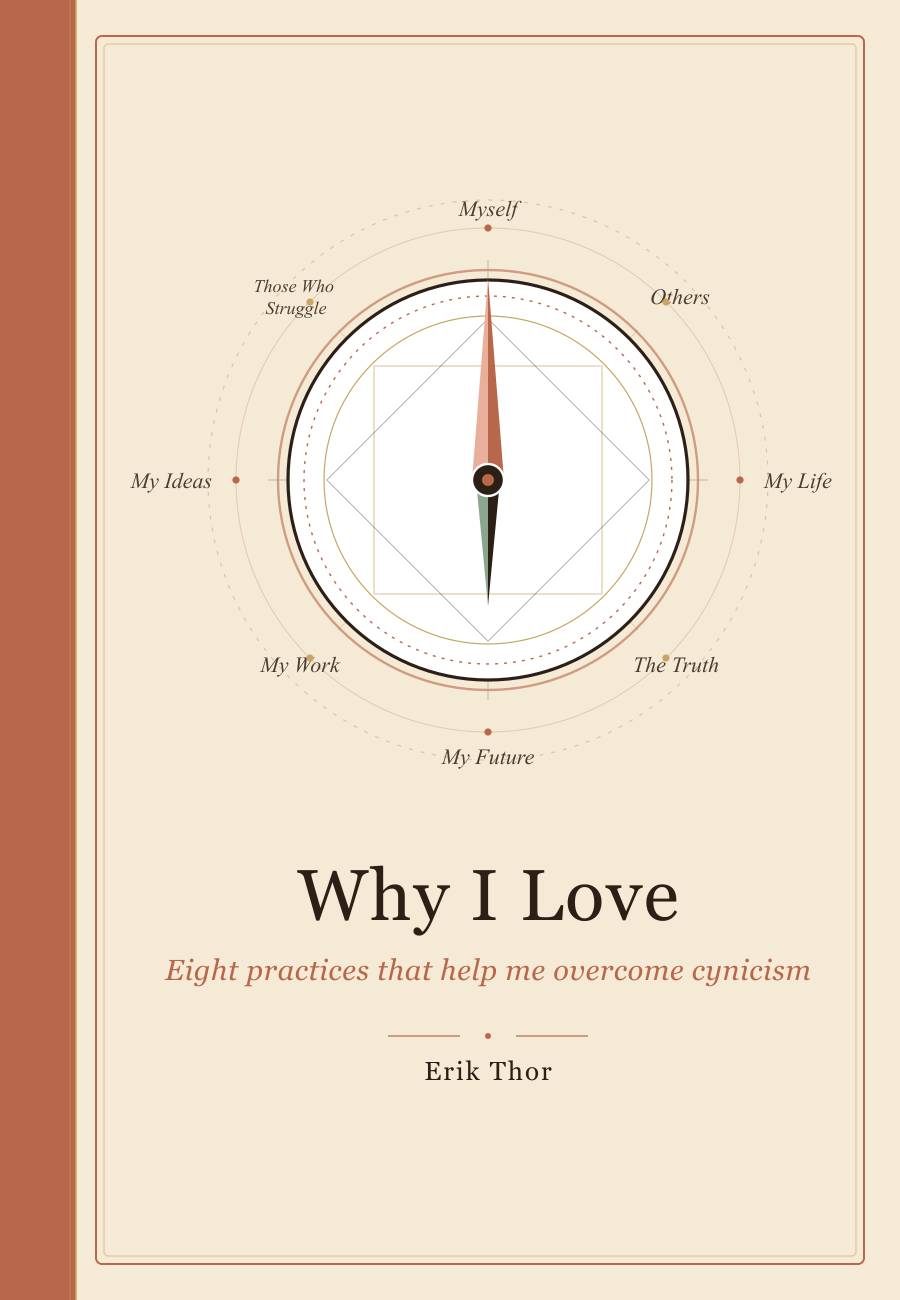
If you resonate with this journey of moving from restless mental flight and endless options to grounded enthusiasm and presence, explore my first book, The Age of Self-Realization (also available as Why I Love). It shares eight grounded life practices for overcoming cynicism, befriending your emotions, and falling in love with your everyday reality.
Share

Shareable Reflection Card
Here is a simple reflection on the Enneagram 7 strategy, formatted to share with others:
The Enneagram 7 Reality
The Habit: “If I keep planning exciting adventures and laughing, the quiet dread can never catch me.”
The Nervous System: “A Flight response that flees Head Center anxiety and boredom into endless possibilities.”
The Shift: “Move from restlessness to enthusiasm by savoring what is already right here in front of you.”
Caption for Sharing:
When life feels quiet and you instantly reach for your phone or start booking another trip, you are using an Enneagram 7 strategy, a Flight response designed to outrun stillness. But genuine aliveness is not found in an imagined future adventure. It lives right here in the room, when you let this moment be enough.
#Enneagram7 #FlightResponse #Mindfulness #PresentMoment #Restlessness #EmotionalRegulation