Have you ever noticed yourself organizing your entire day around preserving your energy, avoiding physical discomfort, and retreating into a cozy, predictable space where nothing unexpected can reach you? That is what happens when you rely on a Self-Preservation Instinct strategy.
Rather than just being “domestic” or “practical,” the Self-Preservation Instinct is an adaptive biological strategy. When you use this pattern, you manage Head Center anxiety through an accommodating Fawn response toward safety: appeasing your fear by building a protective bunker of safe comfort and minimizing physical risk.
How Your Nervous System Reacts with Fawn and Anxiety
When physical fatigue, financial uncertainty, or environmental chaos threatens your peace of mind, your nervous system responds by pulling your focus inward to resources, bodily comfort, and daily logistics. You monitor your energy reserves, stock up on essentials, and eliminate unnecessary friction.
Beneath this protective nesting is often a quiet belief: “The world outside is draining and harsh. I must keep my life safe and comfortable at all costs to survive.”
This coping mechanism offers real practical benefits: you are skilled at building stability, maintaining physical health, and preparing for hard times. But when you make safe comfort your highest goal, your world shrinks. The more you avoid small inconveniences, the more fragile you become. Soon, even ordinary disruptions feel like intolerable intrusions. By protecting yourself from every discomfort, you unintentionally insulate yourself from life itself.
How You Move from Discomfort to Aliveness
The intensity of your Self-Preservation strategy shifts depending on whether you resist discomfort or allow life to touch you:
- Scarcity and Discomfort Dread: When you fight your anxiety by obsessively guarding your comfort, you feel an exhausting dread of depletion. You hoard your time, cancel plans at the slightest hint of tiredness, and worry constantly about money, health, or sudden disruptions. You become trapped in a self-imposed prison of safe routines.
- Protective Nesting and Cautiousness: You feel a distinct sting of stress when your routine is disrupted or when unexpected demands arise. The preservation response activates: you tighten your boundaries, retreat to your sanctuary, and focus on domestic logistics. You can recognize that you are playing it safe, yet stepping outside feels overwhelming.
- Grounded Ease and True Aliveness: When you surrender the impossible demand that life must always be comfortable, your practical groundedness becomes a source of real vitality. You realize that you have the resilience to handle weather, fatigue, and uncertainty. You step outside your sanctuary, savor the beauty of the world, and experience the invigorating joy of being fully alive.
Moving from Safe Comfort to Real Engagement
Practicing Love for Life means recognizing that beauty and connection require stepping into the discomfort of the physical world:
- Notice when safe comfort becomes a trap. When you feel an automatic impulse to decline an invitation or cancel an outing just to stay on the sofa, pause. Ask yourself: “Am I genuinely exhausted, or am I just avoiding the mild discomfort of showing up?”
- Step into mild physical friction on purpose. Take a walk in the rain, try an unfamiliar food, or do a workout that challenges your muscles. Experiencing that your body can handle physical sensation without breaking builds lasting confidence.
- Remember that life happens outside the bunker. Look out the window at the sky, the trees, or the street outside your home. Remind yourself that you were not built just to preserve energy; you were built to spend it on things you care about.
You know you use a Self-Preservation strategy when… (check all that apply)
Self-preservation Match
Check off statements above to calculate your match score.
What It Feels Like in Real Life
It’s Saturday morning. The sun is out, and a friend texts me asking if I want to go for a hike in the hills. My immediate internal reaction isn’t excitement; it’s a mental inventory of friction. It’s slightly chilly outside. I’ll have to find my boots. I might get tired. What if traffic is bad? Wouldn’t it be nicer to stay inside with tea and a book?
In that moment, staying home feels sensible and protective. But when I give in to that impulse weekend after weekend, my world contracts. By evening, I feel lethargic and mildly depressed, having spent the day protecting my comfort instead of living. When I finally push past the resistance, put on my boots, and step outside into the crisp wind, I remember: the discomfort lasted two minutes, but the aliveness stayed with me all week.
A Question for You
What is one experience you have avoided recently because you wanted to stay comfortable? What would happen if you chose aliveness over safe comfort today?
From My Book The Age of Self-Realization
“I worry constantly. What if I fail? What if something goes wrong? Then I make myself finish the sentence. What if? Well, life goes on. A worry is an unfinished sentence. Finish the sentence, and it is no longer a worry.
In February, I found out that I was going to be a dad. I spent the first trimester reading every book I could find on how to be a good parent, how to care for a child, and how to provide a kid with the best possible upbringing. I was scared of making a mistake, of being the reason he struggled later in life.
But when he arrives, he will not need a perfect dad with every manual memorized. He will just need someone who is present, patient, and willing to care. Real aliveness doesn’t come from building an impenetrable bunker against every physical threat. It comes from trusting life, stepping outside, and being here.”
Erik Thor, The Age of Self-Realization, Chapter on How Lucky I Am That I Get to Exist
Preorder The Age of Self-Realization
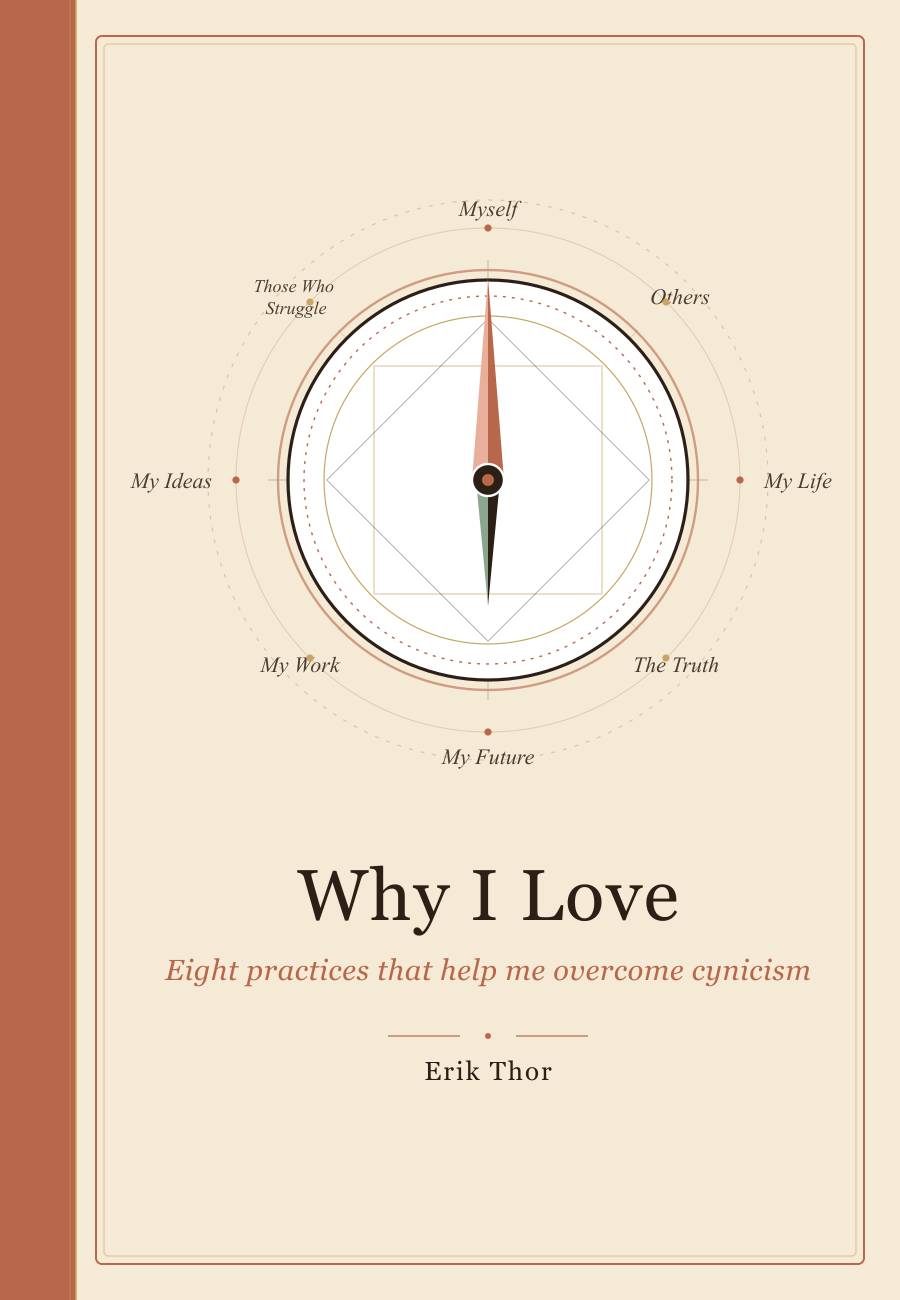
If you resonate with this journey of moving from exhausting anxiety, protective nesting, and comfort-seeking to genuine presence and grounded aliveness, explore my first book, The Age of Self-Realization (also available as Why I Love). It shares eight grounded life practices for overcoming cynicism, befriending your emotions, and living fully in the real world.
Share

Shareable Reflection Card
Here is a simple reflection on the Self-Preservation Instinct, formatted to share with others:
The Self-Preservation Reality
The Habit: “If I keep my life safe, warm, and comfortable, nothing outside can drain me.”
The Nervous System: “A Fawn response toward physical comfort that appeases Head Center anxiety.”
The Shift: “Move from discomfort to aliveness by realizing that real joy lives outside the bunker.”
Caption for Sharing:
Declining invitations weekend after weekend to stay inside your cozy space is not just rest. It can be a Self-Preservation strategy, an instinct that protects you from anxiety by minimizing friction. But when you protect yourself from every minor chill, you miss the vibrant aliveness of the real world.
#SelfPreservation #Enneagram #NervousSystem #ComfortZone #Aliveness #Personalitopia