Have you ever felt a surge of adrenaline rise up inside your chest the moment someone tries to tell you what to do, push you around, or micromanage your work? That immediate instinct to push back and take charge is what happens when you rely on an Enneagram 8 strategy.
Rather than a permanent identity of being a “challenger,” Enneagram 8 is an adaptive behavioral strategy. When you use this pattern, you manage Gut Center anger through a direct Fight response. When situations feel vulnerable or unfair, you mobilize visceral intensity to protect your autonomy, enforce boundaries, and take control before anyone can control you.
How Your Nervous System Reacts with Fight and Anger
When someone imposes arbitrary rules, acts deceitfully, or treats someone unfairly, your nervous system does not freeze or run away. Instead, it triggers an instant surge of energy. You lean forward into the conflict, raise your voice, and meet resistance with direct, unvarnished force.
At the core of this strategy is often a defensive belief: “If I am weak, I will be controlled or exploited. The only way to stay safe is to hold the power.”
This coping mechanism offers real protective value: you can withstand intimidation, champion causes that others avoid, and cut through corporate fluff. But when you fight your vulnerability by constantly maintaining an armored fortress, it comes with a heavy cost. By viewing every relationship as a contest of strength, you can inadvertently intimidate the people you love. You might find it terrifying to admit when you are hurt, tired, or wrong, because you believe that showing a crack in your armor will invite betrayal. You end up bearing the burden of carrying everything alone.

How You Move from Power to Peace
The intensity of your Fight response shifts depending on whether you resist your vulnerability or allow your heart to stay open:
- Domination and Armored Power: When you fight your fear of being controlled, you become combative, aggressive, and bulldozing. You demand total loyalty, interpret difference of opinion as defiance, and refuse to back down even when you are causing unnecessary collateral damage. You feel like the entire world is an enemy territory that must be kept in check.
- Vigilance and Boundary Control: You feel a sharp surge of anger when someone micromanages you or acts unfairly. The Fight response kicks in: your voice rises, your jaw tightens, and you take charge to restore your autonomy. You can recognize that you are feeling defensive, yet letting someone else hold the wheel feels intolerable.
- Grounded Strength and Inner Peace: When you surrender the need to control every room you enter, your natural force becomes a source of deep peace and shelter. You realize that your strength does not come from intimidating others; it comes from your ability to remain calm and gentle in the presence of struggle. You become magnanimous, protective of the vulnerable, and comfortable letting down your armor.
Moving from Control to Real Protection
Practicing Love for Those Who Struggle means learning to meet vulnerability with gentle solidarity rather than conquest:
- Notice the physical surge of heat before charging in. Pay attention to physical cues like a clenched jaw, a forward lean, or a rising vocal volume. Taking a slow breath gives you space to ask: “Is this an actual threat to my safety, or am I just feeling the discomfort of being vulnerable?”
- Practice lowering your volume on purpose. In a disagreement, consciously speak at half your normal volume. When you hold your ground without shouting or posturing, you discover that true authority is quiet, steady, and does not need to force compliance.
- Let someone see you when you are tired. Share one ordinary struggle, doubt, or physical tiredness with someone you trust without turning it into a battle story. Experiencing that you are loved when you are soft dismantles the belief that you must always be strong to survive.
You know you use an Enneagram 8 strategy when… (check all that apply)
Enneagram 8 Match
Check off statements above to calculate your match score.
What It Feels Like in Real Life
I’m in a project meeting, and a manager begins laying out a clumsy, bureaucratic policy that is going to make everyone’s work twice as difficult. I can feel the heat rising in my chest and tightening my jaw. Around the table, people stare at their laps and nod silently.
My immediate reaction isn’t to ask a polite clarifying question. My instinct is to lean forward over the table, cut off the sentence, and call out the policy as completely counterproductive. In that second, taking off the gloves feels righteous and protective. But when the dust settles, the manager is alienated, the team is intimidated into silence, and I’ve created a battlefield where people are afraid to be honest with me. Learning to hold that fire and speak with steady, calm clarity was the hardest lesson of my life, and the only one that actually changed things.
A Question for You
Where in your life are you currently using anger or armor to protect yourself from feeling vulnerable? What would happen if you met that situation with quiet, open presence today?
From My Book The Age of Self-Realization
“I spent years in politics, and looking back, I can see how easily passion can be twisted into judgment. There were times during arguments, especially with people I didn’t know, when I made them into enemies in my own head, when they were really people with real emotions and genuine reasons for doing what they did.
In politics, it is tempting to love your own group by attacking another group. When I spoke to my own side, I talked to them like human beings deserving of empathy. But when I talked about the other side, I talked about them as if they were an enemy, as if they were simply wrong, cruel, or bad.
That was not strength. That was just another way to avoid having a real conversation. True strength required me to sit down with people I disagreed with and actually listen. I had to ask questions and learn from their lived experiences without needing to conquer the room.”
Erik Thor, The Age of Self-Realization, Chapter on Love for Those Who Struggle
Preorder The Age of Self-Realization
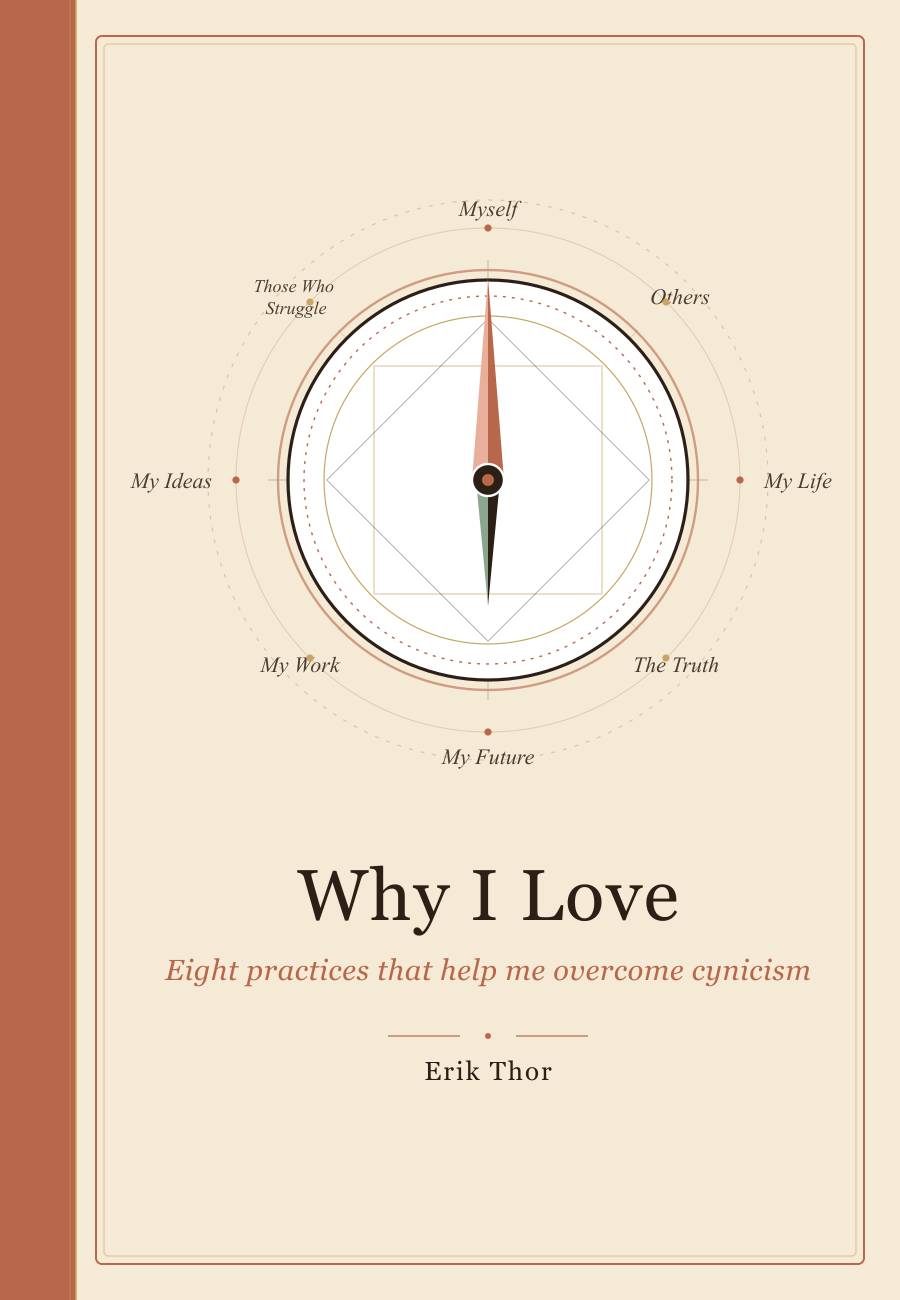
If you resonate with this journey of moving from armored confrontation and dominance to grounded inner peace, calm authority, and genuine respect, explore my first book, The Age of Self-Realization (also available as Why I Love). It shares eight grounded life practices for overcoming cynicism, befriending your emotions, and living with authentic strength.
Share

Shareable Reflection Card
Here is a simple reflection on the Enneagram 8 strategy, formatted to share with others:
The Enneagram 8 Reality
The Habit: “If I am the strongest person in the room, nobody can control, manipulate, or hurt me.”
The Nervous System: “A Fight response that harnesses Gut Center anger into immediate confrontation.”
The Shift: “Move from power to peace by using your formidable strength to protect rather than dominate.”
Caption for Sharing:
When someone tries to tell you what to do and your jaw clenches with an urge to take over, you are using an Enneagram 8 strategy, a Fight response against vulnerability. But you do not have to fight every battle to stay safe. Quiet, immovable presence carries far more authority than shouting.
#Enneagram8 #FightResponse #Boundaries #Leadership #AngerManagement #Personalitopia