Have you ever caught yourself walking into a room and instantly scanning the social hierarchy, calculating who holds influence, what the unwritten rules are, and how you need to adjust your tone to belong? That is what happens when you rely on a Social Instinct strategy.
Rather than just being “extroverted” or “friendly,” the Social Instinct is an adaptive survival pattern focused on group standing, belonging, and shared purpose. When you use this strategy, you manage the threat of Heart Center shame through a Flight response: fleeing from the vulnerability of isolation by adapting to collective expectations.
How Your Nervous System Reacts with Flight and Shame
When you sense social tension or worry about being excluded, your nervous system responds by tracking the collective atmosphere. You produce alertness and social sensitivity to help you navigate group dynamics.
At the core of this pattern is often a defensive belief: “I need to compromise who I am to fit in with others. If I stand out too awkwardly, I will be cast out.”
This coping mechanism offers clear evolutionary protection: aligning with a tribe keeps you safe from the dangers of isolation. But when overused, it creates a painful dilemma. When you constantly adjust your opinions, laugh at jokes you find dull, or suppress your true thoughts to avoid rocking the boat, you experience an inward alienation. You might be surrounded by people and yet feel completely alone, knowing that the group accepts your social mask rather than your real self.
How You Move from Alienation to Connection
The intensity of your Social Instinct shifts depending on whether you resist your individuality or share it honestly:
- Alienation and Resentment: When you fight your fear of exclusion by obsessively conforming, you feel an urgent need to please the crowd or climb the social hierarchy. You might find yourself gossiping, taking sides, or suppressing your own values just to maintain standing. Internally, you feel cynical and bitter, convinced that all social relationships are transactional.
- Social Vigilance and Awkwardness: You feel a noticeable tension when entering a group or joining a conversation. The Flight response activates: you scan for approval, monitor how your comments land, and worry about saying the wrong thing. You can recognize that you are self-conscious, but you still feel pulled to manage how others perceive you.
- Genuine Connection and Community: When you surrender the need to curate an image for the room, your natural social awareness becomes a profound gift. You stop using the group for security and start contributing to it with authentic presence. You can speak your mind calmly, welcome newcomers without pretense, and build real friendships based on shared values rather than conformity.
Moving from Conformity to Real Contribution
Practicing Love for Ideas means taking responsibility to bring honest, meaningful contributions to the community rather than just seeking social safety:
- Notice when you adapt your opinions automatically. Pay attention to the physical sensation of holding back your real perspective in a group discussion. Taking a slow breath gives you space to ask: “Do I actually agree with this, or am I agreeing just to keep things smooth?”
- Practice sharing one authentic perspective. Speak up once in a conversation with an honest thought or a creative idea that might not be the consensus view. Experiencing that a healthy group can handle diverse viewpoints dismantles the fear of exclusion.
- Remember that you are not responsible for the group’s collective comfort. Allow other people to experience awkward pauses or work through their own disagreements without feeling that you must rush in to mediate or entertain the room.
You know you use a Social Instinct strategy when… (check all that apply)
Social Instinct Match
Check off statements above to calculate your match score.
What It Feels Like in Real Life
I’m sitting in a meeting or standing in a circle of acquaintances after work. Someone makes a sweeping, cynical comment that I completely disagree with. Around the circle, people nod politely.
My immediate instinct isn’t to say, “I actually see it quite differently.” My instinct is to give a slight nod, smile, and let the moment pass. In that second, staying quiet feels like smart diplomacy. It protects me from friction. But walking home, I feel a quiet disgust with myself. I compromised my own integrity just to keep the approval of people whose opinions I don’t even respect.
A Question for You
Where in your social life are you currently holding back your real thoughts just to stay safe? What would happen if you brought your true perspective into the room today?
From My Book Why I Love
“I used to assume that when I felt alone, the answer was simple: just go out and make some friends. But honestly, that was often when I felt the most alone.
Why did socializing feel so alienating? It had everything to do with the masks I was wearing. The more I tried to project an artificial image, the more exhausting it became. I told myself I could not talk about certain interests because others would not understand, or that I could not share my insecurities because they were unwelcome.
My entire self-worth depended on how popular I was. Like so many people, I pursued connection, but I confused connection with popularity. One fills you up, while the other leaves you constantly hungry for more. Real belonging never comes from self-erasure or playing a role. It begins when you show up as you are.”
Erik Thor, Why I Love, Chapter on Love for Others
Preorder Why I Love
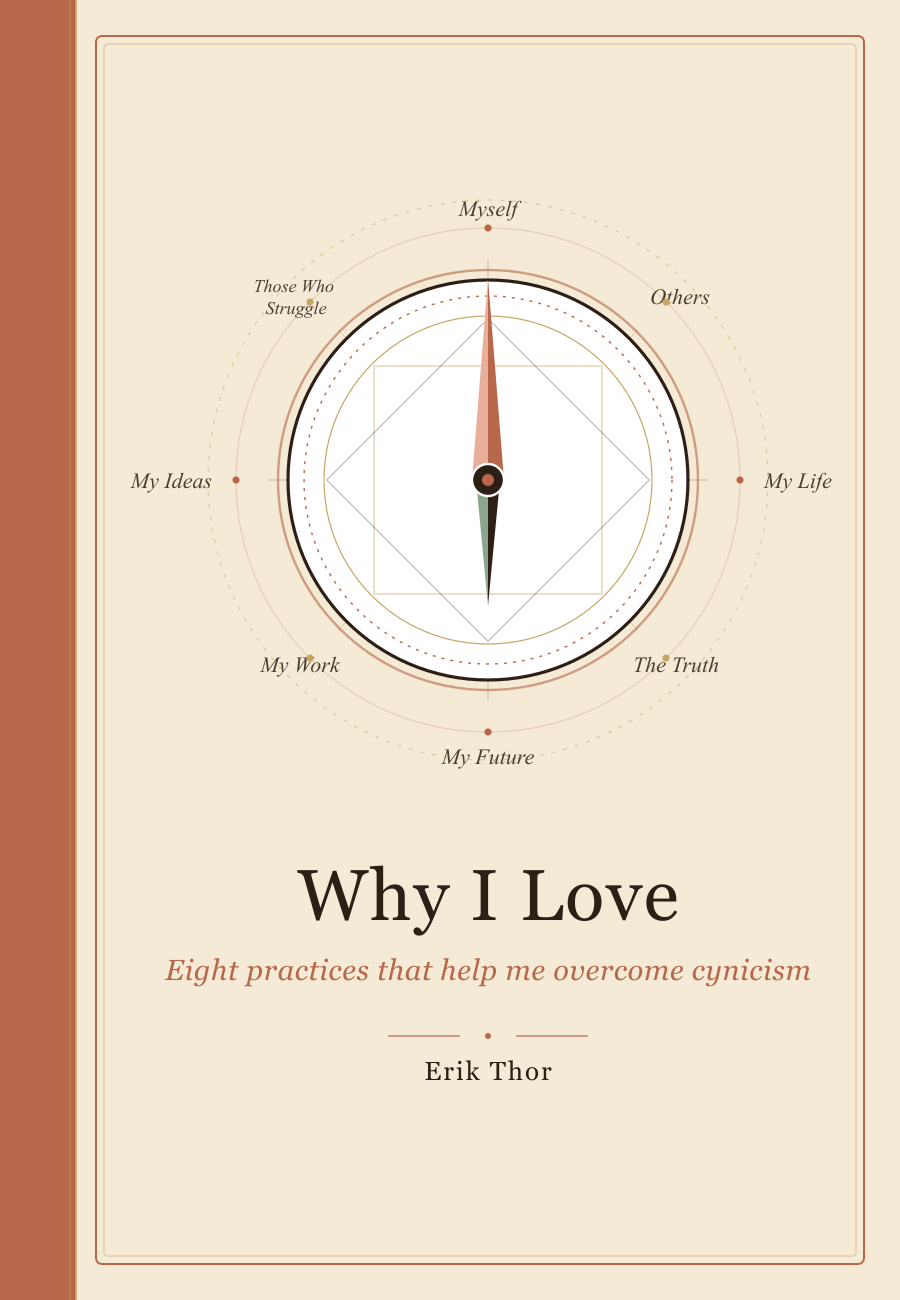
If you resonate with this journey of moving from exhausting social anxiety, group conformity, and alienation to grounded belonging and real connection, explore my first book, Why I Love (also available as Why I Love). It shares eight grounded life practices for overcoming cynicism, befriending your emotions, and building authentic relationships.
Share

Shareable Reflection Card
Here is a simple reflection on the Social Instinct, formatted to share with others:
The Social Instinct Reality
The Habit: “If I scan the room, adapt to expectations, and belong to the group, I will never be cast out.”
The Nervous System: “A Flight response that manages Heart Center shame by conforming to collective norms.”
The Shift: “Move from alienation to genuine connection by sharing your unique ideas with honest courage.”
Caption for Sharing:
Scanning a room and adjusting your tone to blend in is not just social intelligence. It can be a Social Instinct survival habit, a Flight response designed to outrun the fear of alienation. But real belonging never comes from self-erasure. It begins when you have the courage to bring your real perspective into the conversation.
#SocialInstinct #Enneagram #Belonging #Authenticity #EmotionalRegulation #Personalitopia