Have you ever felt out of place in a group of people, convinced that you are wired differently and that no one in the room could possibly understand you? That is what happens when you rely on an Enneagram 4 strategy.
Rather than an identity or an artistic label, Enneagram 4 is a behavioral coping pattern. When you use this strategy, you manage Heart Center shame by pulling into a Freeze response. You withdraw emotionally, focus on what makes you different, and process your discomfort in isolation.
How Your Nervous System Reacts with Freeze and Shame
When you feel misunderstood, flawed, or socially exposed, your nervous system does not push you to fit in or argue. Instead, it triggers a Freeze response. You pull inward, freeze your outward emotional expression, and retreat into your thoughts.
This freeze strategy serves an immediate defensive purpose: it protects you from facing more shame, criticism, or rejection from other people. By building up an idea of yourself as unique or different, you can feel superior and inferior at the same time. You become frozen in an identity that feels deep and distinct, which shields you from what you imagine others think of you.
The cost of this defense is high. While freezing protects you from other people’s negative opinions, it locks you into your own. You never reality-test your assumptions about yourself or others. By clinging to the belief that you are fundamentally broken or unsuited for normal life, you maintain feelings of victimhood, alienation, and defectiveness. You protect yourself from rejection, but you guarantee your own isolation.
How You Move from Self-Criticism to Integrity
The intensity of your Freeze strategy changes depending on how acutely you feel exposed or flawed:
- Intense Self-Criticism: Shame feels overwhelming and permanent. You feel convinced that you are deeply defective, alien, and unfixable. You freeze completely, cutting off communication and refusing connection because accepting support would challenge the belief that your suffering is unique. You stay stuck in self-pity and brooding behind an emotional wall of silence.
- Brooding Isolation: You feel a sharp sting of inadequacy or defectiveness compared to people around you. Your Freeze response activates: you go quiet, cross your arms, and slip into isolation. You tell yourself that other people are too superficial to understand you, using an identity of being misunderstood to soften the pain of feeling excluded.
- Grounded Integrity: You feel a brief awkwardness or sense of not belonging, but you stay present in the room. You can acknowledge your discomfort without needing to pull away, romanticize your feelings, or prove that you are different. You meet people as an equal human being without armor.
Moving from Brooding Isolation to Real Connection
When you notice yourself freezing into the identity of the misunderstood outsider, you can shift toward grounded participation:
- Notice when you use uniqueness or defectiveness as a shield. Catch the moment you tell yourself, “Nobody gets me,” or “I’m just too different for this.” Recognize that this thought is not deep emotional truth; it is a freeze defense designed to protect you from the discomfort of being ordinary and visible.
- Ground yourself in simple, physical tasks. Emotional freezing pulls you into your head and chest, looping on past hurts and feelings of inadequacy. Washing dishes, making a cup of tea, stepping outside, or focusing on your breathing pulls your nervous system out of inward brooding and back into physical reality.
- Test your assumptions in direct conversation. Instead of assuming people judge you or reject you, share one simple, ordinary observation without performing emotional drama. When you allow yourself to participate without proving how different you are, you find that connection happens through shared humanity, not through being special.
You know you use an Enneagram 4 strategy when… (check all that apply)
Share your match percentage in the comments or post your custom results image to social media.
What It Feels Like in Real Life
I’m sitting around a dinner table with acquaintances, and everyone is chatting easily about everyday things. Suddenly, a wave of awkward self-consciousness hits me. I feel clumsy and out of place, like I don’t fit into the conversation.
My immediate reaction is to go quiet, look away, and tell myself, “I’m just wired differently. I don’t belong in these shallow settings.” In that moment, retreating feels safe. It shields me from the risk of saying the wrong thing. But walking home alone, I’m the one who feels bitter and isolated, nursing an ache that I created for myself by refusing to stay in the room.
A Question for You
When you feel the urge to pull away and tell yourself that nobody understands you, what negative belief about yourself are you trying to protect? What would happen if you stayed present in the conversation instead?
From My Book The Age of Self-Realization
“Surfing online, I searched for answers. I remember getting an email from what turned out to be a cult. They told me that I had the rarest personality type in the world, and that less than one percent of the population shared my mind. But they also said I was broken, that my energy was wrong, and that they could help me find the way back to who I was meant to be.
I realized then and there that every insecurity I have could be manipulated or used against me. For a long time, I had swung between two extremes:
1. Somebody special, meant to save the world on a unique quest.
2. A broken misfit, doomed to never fit in anywhere.I saw myself as a diamond hidden underneath a rock. I thought I just had to cut away all the ugly parts to eventually reveal my inner shine. But cutting away or repressing parts of myself was not authentic. I was not an invulnerable diamond; I was a simple flower. What I really needed was nourishment, support, and the right environment.”
Erik Thor, The Age of Self-Realization, Chapter on Love for Yourself
Preorder The Age of Self-Realization
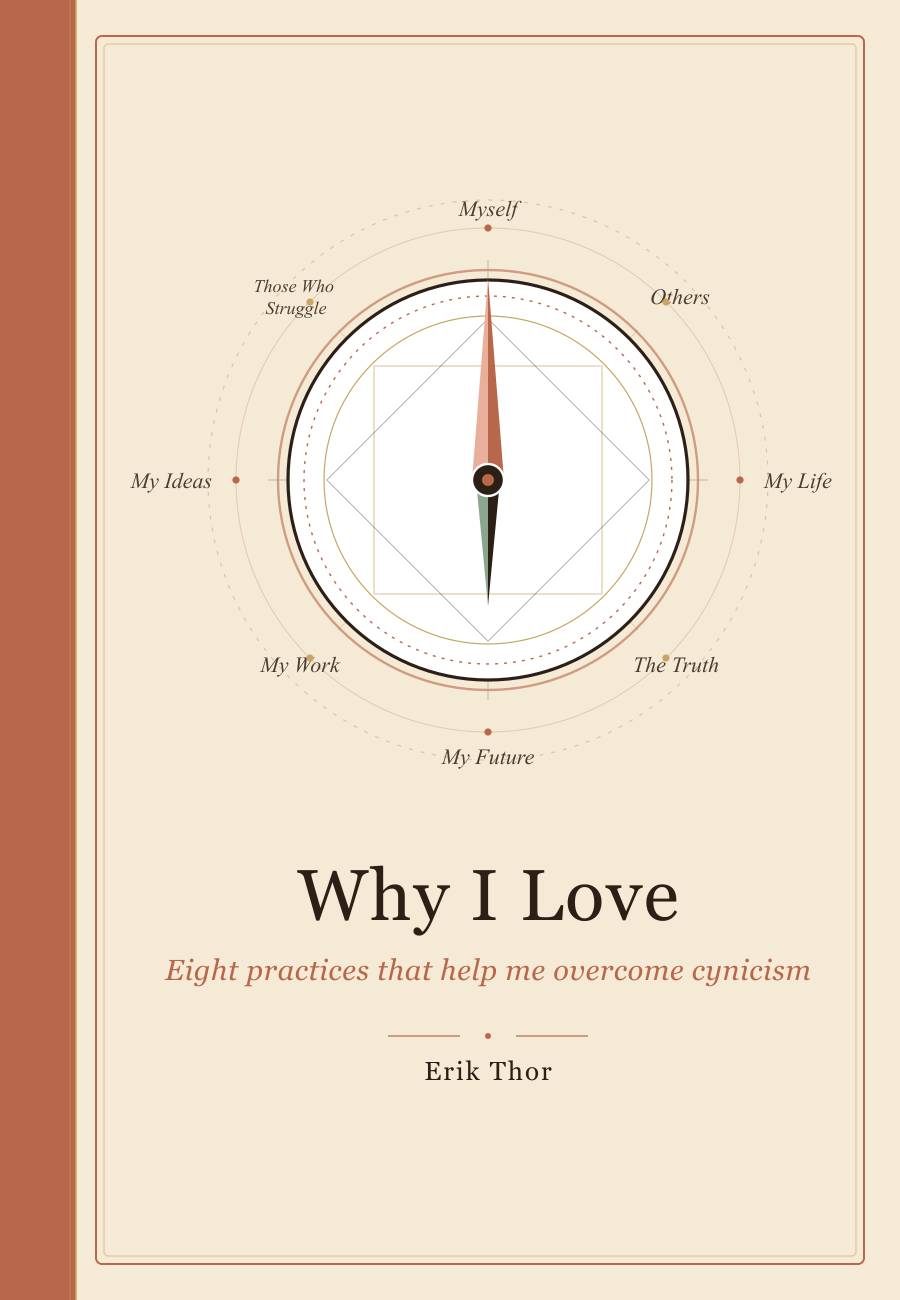
If you resonate with this journey of moving from painful isolation and harsh self-criticism to quiet integrity and self-compassion, explore my first book, The Age of Self-Realization (also available as Why I Love). It shares eight grounded life practices for overcoming cynicism, befriending your emotions, and living with honest self-respect.
Share

Shareable Reflection Card
Here is a simple reflection on the Enneagram 4 strategy, formatted to share with others:
The Enneagram 4 Reality
The Habit: “I will reject the group first so they cannot see how flawed I feel.”
The Nervous System: “A Freeze response that manages Heart Center shame through emotional withdrawal and isolation.”
The Shift: “Move from self-criticism to quiet integrity by allowing yourself to be ordinary and connected.”
Caption for Sharing:
Telling yourself that you are fundamentally different or that nobody understands you is not romantic. It is an Enneagram 4 strategy, a Freeze response that shields you from social shame by retreating into isolation. What happens when you drop the outsider identity and simply stay present in the room?
#Enneagram4 #FreezeResponse #Authenticity #SelfWorth #EmotionalRegulation #Personalitopia