When I was twenty, I was trying to figure out who I was. I was in university, thinking about what kind of job I wanted, and most of all—if I’m honest—I was thinking about how to make myself employable. How could I sell myself to an employer? How could I make myself look attractive as a candidate to compete with people who had better grades or different skills?
1. The Billion-Dollar Sorting Machine
The idea I had back then was simple: if I can find the job that best fits my personality, and if I can convince an employer that I am that person, then I have a better chance of getting hired.
That simple idea is why personality testing is a billion-dollar industry today.
During the Second World War, Katharine Cook Briggs and Isabel Briggs Myers wanted to develop a system companies and institutions could use to sort civilian candidates into jobs where they thought they would fit best. It was sold to organizations as a sorting machine: Where do you fit? Where do we put you? Which role, which department, which desk? Do you fit our company based on whether you are an introvert or an extrovert, intuitive or sensor, feeler or thinker, judger or perceiver?
Companies all over the world spend millions on personality tests every year during hiring.
And I think we have gotten completely confused about what these tests are doing.
A personality test only describes how you appear and present yourself to the outside world. It tells an employer what you look like on the surface. It does not describe your character.
2. Personality Is an Appearance, Character Is a Virtue
Personality is in many ways an extroverted thing. It is what things look like on the outside compared to other people.
Do you appear outgoing or quiet? Shy or confident? Creative and open to new ideas, or traditional? Emotional or logical?
It is based on comparison and competition. It fits directly into a market logic where we arrange and rank human beings based on how their image compares to the people around them. And that focus on presentation distracts us from the person underneath.
What we need to know when we work with someone is not how they look or appear. We need to know whether they have good character.
In ancient Greece, people talked about character in terms of virtues. Virtues like curiosity, honesty, kindness, industriousness, and ambition. These are introverted qualities—inner traits. You cannot see them at a glance across a conference table.
Look at hiring. We often say we want a “bubbly” person for the team. But bubbly is an image. It is an upbeat voice in a morning meeting and a warm smile at the coffee maker. Someone can be bubbly and still tell a client what they want to hear instead of what is actually true. Someone can appear brilliant in an interview, but take lazy shortcuts, cheat, and take credit for other people’s work when the door closes. Someone can seem extroverted at the office, and then go home and pull all the curtains shut because they are completely overwhelmed from performing all day.
When you date, you see the exact same thing. Do you want to date a nice person, or a kind person?
Nice is an appearance. Nice is holding the door, complimenting your shirt, and smiling at dinner. Those are pleasant social manners, but they are easy to perform when you want someone to like you. Kindness is an inner virtue. Kindness is staying by a hospital bed when someone is sick. Kindness is keeping a promise on a Tuesday afternoon when you’re exhausted and doing it costs you something.
Nice is how someone presents. Kindness is who someone is.
3. The Customer Service Lie and Feeling Unemployable
This obsession with personality does real damage, because many people grow up feeling like they have the wrong personality.
You take a test, get four letters like INFP or INTP, and think: “Nobody will ever want to hire someone like me. I don’t have the right personality.” You feel forced to present and sell a fake version of yourself just to get an interview.
That happened to me directly.
When I applied for a job in customer service thinking I was an INFJ, my very first thought was: I have to lie. I have to convince these people I am an extrovert for the next sixty minutes. I have to pretend to be extra outgoing, extra charming, someone who loves being on the phone all day and loves working in a loud, open cubicle with noise bouncing off every wall.
We built a system that rewards people for being inauthentic.
And then employers turn around and complain about it. Companies spend millions on MBTI testing and recruiting, only to find that the candidate who smiled through the interview is a completely different person when they actually show up on Monday morning. Employers feel upset and wonder where the recruiter made a mistake, while the employee sits at their desk feeling drained from maintaining a mask.
4. How to Find Real Character Without Resumes
If resumes and one-hour interviews only test how well someone performs an image, how do we actually find character?
The answer is not in asking someone to send in a resume or talk about themselves for an hour. There are three practical ways to discover character:
- Ask for real life lessons: You want to know what a person is like when they are under stress, when a deadline is slipping, or when they made a real mistake at work. What went wrong? What did they do about it? How did they improve? That shows you their character.
- Rely on referrals and recommendations: Speaking to a former teammate, a friend, or a teacher often tells you far more than talking to the candidate directly. A person who has worked with them can tell you: “Here is what they do when the project gets difficult. Here is where they are gifted, and here is where they need support.”
- Do a practical trial: Invite them to work on a real project with the team for a few days. See how they approach the task, how they collaborate, and how they handle feedback in the actual environment.
Environment influences personality. A person can show up one way in an artificial interview, and completely differently in a real work setting. A practical trial lets you see what they actually do.
5. Looking Beneath the Mask
This distinction between surface appearance and inner character is the reason I wrote my new book, Why I Love.
I want people to look beneath the mask and beneath the surface. It is easy to get caught up in personality types—using them to find a date on an app, to make friends on social media, or to explain yourself when someone asks who you are.
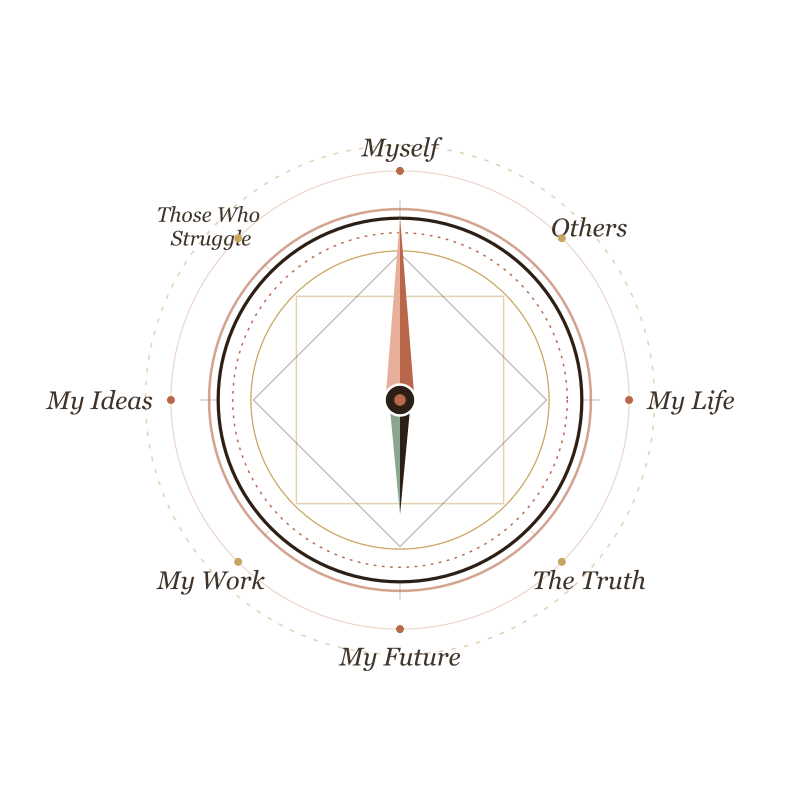
When you go one step deeper, you stop asking how you appear to others. You sit down and ask yourself:
- What do I genuinely love and care about in my life?
- What is something I love about myself?
- What is something I love about other people?
- What is something I love about living?
When you tap into those deeper values, ask yourself: How do I show up for these things? How do I talk to myself when I make a mistake? How do I treat the people I care about? How do I treat a project that is important to me?
By knowing that, you find out who you are as a human being. Not how you appear to others, not how you compete with other people, but who you are on the inside.
Even if you are an introvert, even if you find it hard to market yourself or speak in front of a room, you have inner qualities, traits, and skills that are of vital importance to a team, a friend group, or a partner. When you stop worrying about having a charismatic personality, you can start showing up as your authentic self.
Reflecting on Personality and Character
Have you ever felt forced to pretend to have a different personality just to get hired or fit in at work? And what is one inner quality or virtue in yourself that a resume never captures, but that makes a genuine difference in what you do?
Share

Loading discussion…