We are now a week into the campaign for Why I Love and the eight practices of love. Today I want to talk about what would have happened if I had believed my personality test results. For the longest time, I did. I took my first test, got my four letters, an introverted, intuitive, feeling type (INFJ), and I held on to that identity for years. I let it make some of my decisions for me. When I got lazy, I asked myself what someone with my type would do in this situation, and then I did that.
1. I Let Four Letters Make My Decisions
I’m 25. I’m working in customer service, and I’m waiting for the day I blow up on YouTube and get my big break. Every evening I read about my personality type, and every description agrees with me about what I’m capable of and what I’m not.
I’m told I’m a people person, so I stay in a people job. I’m told I’m not built for technical work, so I don’t try it. I’m told I’m sensitive, so I avoid situations that might be hard. Instead of asking what I want, I ask what someone like me is supposed to want.
Looking back, I can see that the label had stopped describing me and started deciding for me. That’s a subtle shift. The description doesn’t feel like a limit while you’re inside it. It feels like knowing yourself.
2. The Version of Me That Didn’t Change
I can imagine the version of me that kept believing.
He’s still in customer service. Not with joy, not with passion for the job, but because he’s decided there’s no other option for him. He has been hellbent on politics, then on YouTube, then on psychology, and he has no plan B. He’s waiting for something to happen to him.
By now, he has probably grown cynical. He has stopped believing that things can change. He tells himself he doesn’t have what it takes, and he settles.
That version of me didn’t think he could make it in IT. He didn’t think he could become a programmer. He didn’t think he could get a driver’s license. He didn’t think he had what it took to get his life together and choose a different route. Every one of those beliefs matched his personality type description perfectly.
3. Everything Told Me Not to Become a Programmer
Every video and every type description I found said the same thing. Becoming a programmer is a terrible idea for someone like you, Erik. Stick to something people oriented. Stick to psychology. Stick to something quieter.
I did something different anyway.
There was a transition phase where I doubted I was going to make it. I felt anxious and uncertain about my prospects. There were many moments when I wondered whether I should give up, quit, and go back to the old ways. I didn’t. I stuck with it.
Today I work as an IT architect, and it’s one of the most stimulating jobs I can imagine. I talk with people every single day. I sit in meetings and make decisions about systems and integrations and how things fit together. When someone comes to me and says, Erik, my team needs this to work so we can sell this product, I get to sit down with them and say, I can make that work for you. I can find a plan. I can solve this.
The version of me at 25 would never have thought that possible. The type descriptions I trusted would have agreed with him.
4. I’m Not Saying You’re Wrong About Yourself
I’m saying you could be.
I don’t think we can ever know for sure that we have found out who we are. So I try to hold every idea I have about myself with some level of doubt, whether it’s a good idea or a bad one. If I believe I’m kind, or rude, or honest, or social, or quiet, or shy, I try to ask myself every day: is this still true for me today?
It doesn’t matter how strong your test score was. It doesn’t matter how many people have independently confirmed your type or your trait. I would still leave room for the possibility that it’s more complicated than that. If nothing else, it’s more complicated than you think it is.
I see this a lot with people who might be introverted. They have a real tendency toward quiet, and on top of it they carry a very limiting idea of what that tendency means for them, what they can do, and who they can be. That second layer is the one that costs them. You can know something true about yourself and still be wrong about what it means.
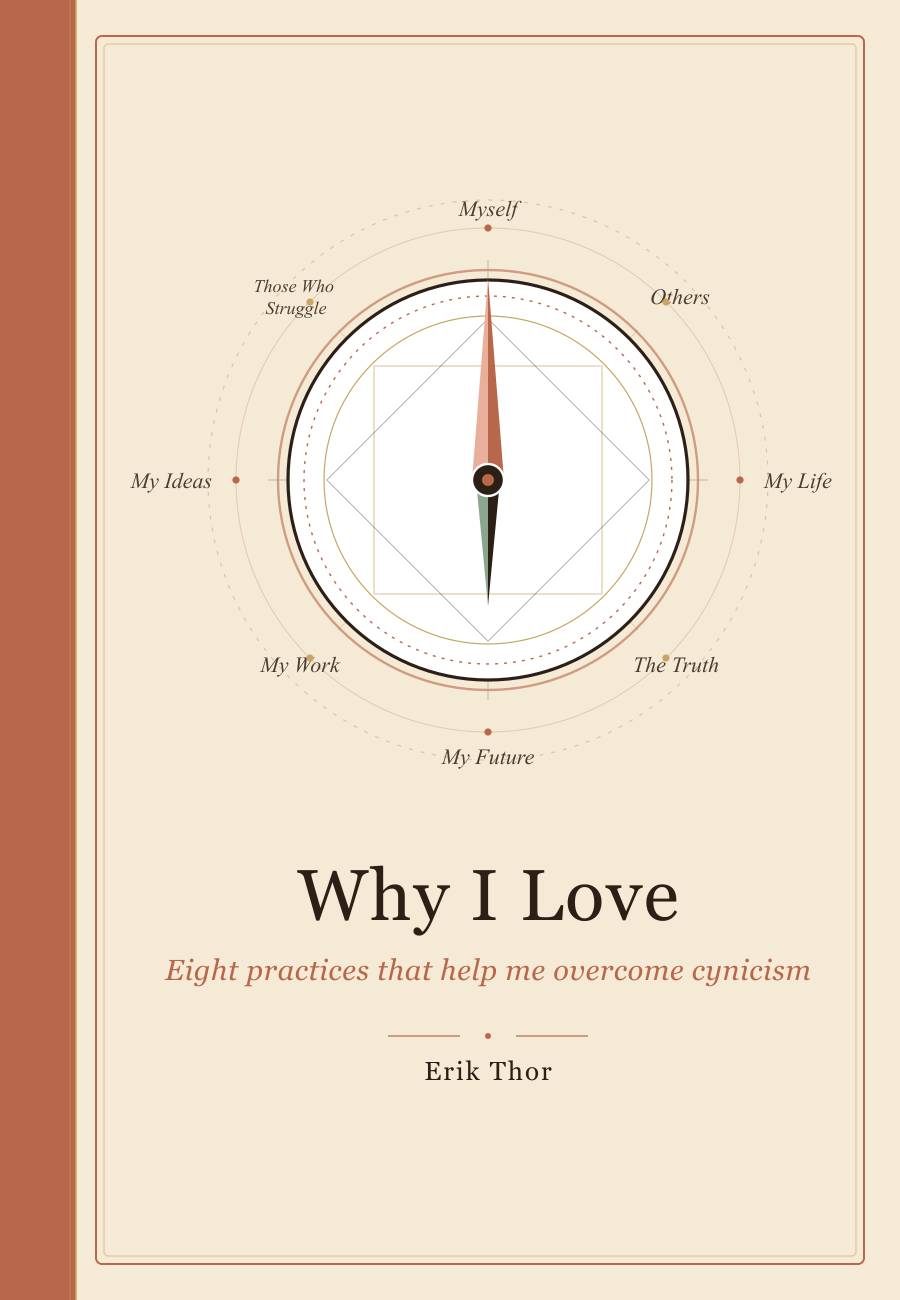
Why I Love is a book about challenging what you think is possible for yourself. It’s not a book telling you that your self-image is wrong. It’s a book asking you to see what else could be possible.
I’m really curious about your story. Was there a moment in your life when you had a limiting idea about yourself? And was there ever a moment when you proved that idea wrong?
Reflecting on the Ideas You Hold About Yourself
Write down one thing you believe about yourself that you have never seriously questioned. It can be a strength or a weakness. Then ask: is this still true for me today? What would I try this month if I allowed myself to be wrong about it?
Share

Loading discussion…