Fiction often paints the idea of the ”lonely genius” – arrogant, stubborn, and trusting only in their own opinion. Let me introduce the ”prosocial genius” who relies on communcation and openmindedness
Movies and books often tell the story of the most intelligent person. They say that the more intelligent you are, the more alone, the more arrogant. Intelligent people are often psychopaths, or at least sociopaths, with little concern for human emotions. These “geniuses” ignore their peers’ opinions and trust only their own judgment. Dictators are often described as “intelligent” types that use their brutal intelligence to advance cruel, inhuman causes, for the sake of progress, success, or achievement.
Fueled by these ideas, I was drawn to becoming an “expert” or pursuing some kind of special position, wanting to be the best or most knowledgeable in my area of expertise. But it only made me arrogant and close-minded, and less receptive to learning and changing my mind, a necessity of growth and intelligence. I decided eventually that I wanted to find a different approach.
I have grown to have a very different idea of what it means to be a self-actualized genius. One where the most intelligent person is prosocial, a good listener, an open-minded observer, and a great communicator. But before we talk about that, I want us to reconcile ourselves to the fact that humans are less intelligent than we have been for many thousands of years, and still far better off.
It’s no longer about being the best, strongest, or smartest person in the room
No matter how you try to fight it, evolution has changed course, especially in humans. It no longer applies the “survival of the fittest” – or, its definition of the fittest, has changed. Over time, human brains are shrinking, and we are losing skills at a rapid rate. Our individual cognitive skills have greatly diminished, while our power as a species has increased. We are less intelligent than wolves but far more capable. The loss of intelligence has given way to the rise of collective intelligence. As individuals, we are stupid, and most of us would not survive on our own, but together, we are more powerful. What will our future as a species look like? How long will this trend go on? Will we even have an ego in the future, or will we be more like ants – solving problems together in large groups, instead of individually?
In the past, humans were few and scarce, tribes small and spread out. We had nobody to rely on but ourselves and our nearest family members. We had to develop strong instincts, control of our muscles, and our bodies. We relied on heightened senses, an intense sense of smell, we saw better in the dark, and had a richer sense of taste and touch. We were better coordinated and far, far more selfish. Today, humans are many, spread tightly across small spaces, and generally, we do better in large cities and societies than in small ones. In these big groups, we outsource skills and talents to others, trusting some for medical expertise, some for engineering, some for programming, and others for customer service.

Tokyo has more than 20 million inhabitants and is one of the most well-organized, well-functioning cities in the world.
The greatest researchers collaborate in big groups, relying on peer reviews, shared goals, and resources. Politicians are rarely lone dictators anymore, and even the most hardheaded dictator will rely on experts, who in turn, rely on other experts, who in turn, rely on other experts, because individual judgment is weak and limited. While human knowledge has grown more vast, individual human knowledge has grown relatively smaller.
A thousand years ago, the individual person knew far more than you do, relative to what humanity knew as a whole at the time. In this sense, like in many more, we can say that as individuals, we have grown more stupid – relatively speaking. Even if we’re more educated than ever before. Trying to fight against your own ignorance is as impossible as being a drop fighting against the ocean. Not to say you shouldn’t study – we are all depending on you to individually thrive and develop mastery in some areas. So what does it mean to be intelligent as a human being today?
The idea of what it means to be intelligent as a human being has changed
In the modern world, gaining access to the wide world of human knowledge requires us to primarily develop our prosocial skills:
We have to be better listeners.
We have to be more open-minded and curious about other people.
We have to be more willing to read and learn from other people.
We have to be humble and willing to admit that we are and can be wrong.
We have to be skilled at collaboration, communication, and languages
We need emotional intelligence and cultural sensitivity
We need conflict resolution skills and the ability to reconcile individual differences in opinions.
It’s simple. Prosocial behaviour, emotional intelligence, opens doors, and gives you an increased ability to rely on humans’ collective neurons and skills, granting you an increased ability to learn and practice higher-level thinking.
Individual problem-solving and the ability to think about something logically on your own are useless, slow, and inefficient in comparison to being able to talk and discuss problems with other people, and those who have a greater skill in languages, communication, and “thinking out loud” — see my recent article. They thrive.
It’s not that individual skills are useless; we still need critical thinking and the ability to problem-solve and be creative, but how we practice these skills has changed. The most creative people are those who can cross-contextualize and reinterpret what they hear, read, and see; so, intelligent, actualized types learn to exercise more and more “collaborative intelligence”. We are, without our knowledge, outsourcing our thinking more and more to our environments, making our friends and family members our therapists, making our friends co-authors of our next book, and making our outer environment a tool to improve our accuracy, intelligence, and skill.
How do you feel about that? Do you think it’s gone too far? Or is it unavoidable? What does it mean to have balance between individual skills and the ability to leverage our environment effectively to deal with problems?
What remains true is that, as a species, humanity has become much more intelligent, and this has driven up our IQ test scores, grades, and educational levels. We are more educated than ever, not because we have gotten individually smarter, but because we have become better at listening to, reading, and consuming information than in the past. Or, you could say, we have gotten smarter, but your definition of smart is: we have gotten more prosocial, better at collaboration, and less egotistical.
Introducing the prosocial genius
The modern-day genius is the prosocial genius. Think of him or her as the most charming person in the room. Humble, open-minded. The prosocial genius makes you feel intelligent, asks for your opinion, seeks your knowledge and advice, and wants to use your skills to collaborate with you. They walk around the office, talking with everybody about everything. They’ll spend most of their time reading books, gaining insight into the world, and they are curious about everyone and everything. Their skill with language and complex vocabulary allows them to express and understand thoughts in nuanced ways.
When a conflict arises, they’re able to mediate and see the other perspective, and find a positive synthesis. They have no ego; their primary goal is an objective understanding of the world as it is. They know how to manage their own emotions by effective co-regulation, seeking the comfort of others, sharing emotions openly, and admitting to flaws and struggles in their own lives. The prosocial genius is definitely seen as intelligent.
They’re seen as a polymath, an expert on everything, but not because they have personally attained a level of mastery in something, but because they know where to find information, who to talk to, and how to apply it effectively in their own life. Think of them as people who have gained access to the collective consciousness, people who can “think others’ thoughts”, feel others’ feelings, see others’ perspectives, quickly, instantaneously. When they’re asked, “Why are you so smart?” they reply, “Oh, I’m really not that intelligent. These ideas were not mine, I just learnt them from other people!”
So when you think of them, don’t think of them as smart in the traditional way.
Think of them as the prosocial genius.
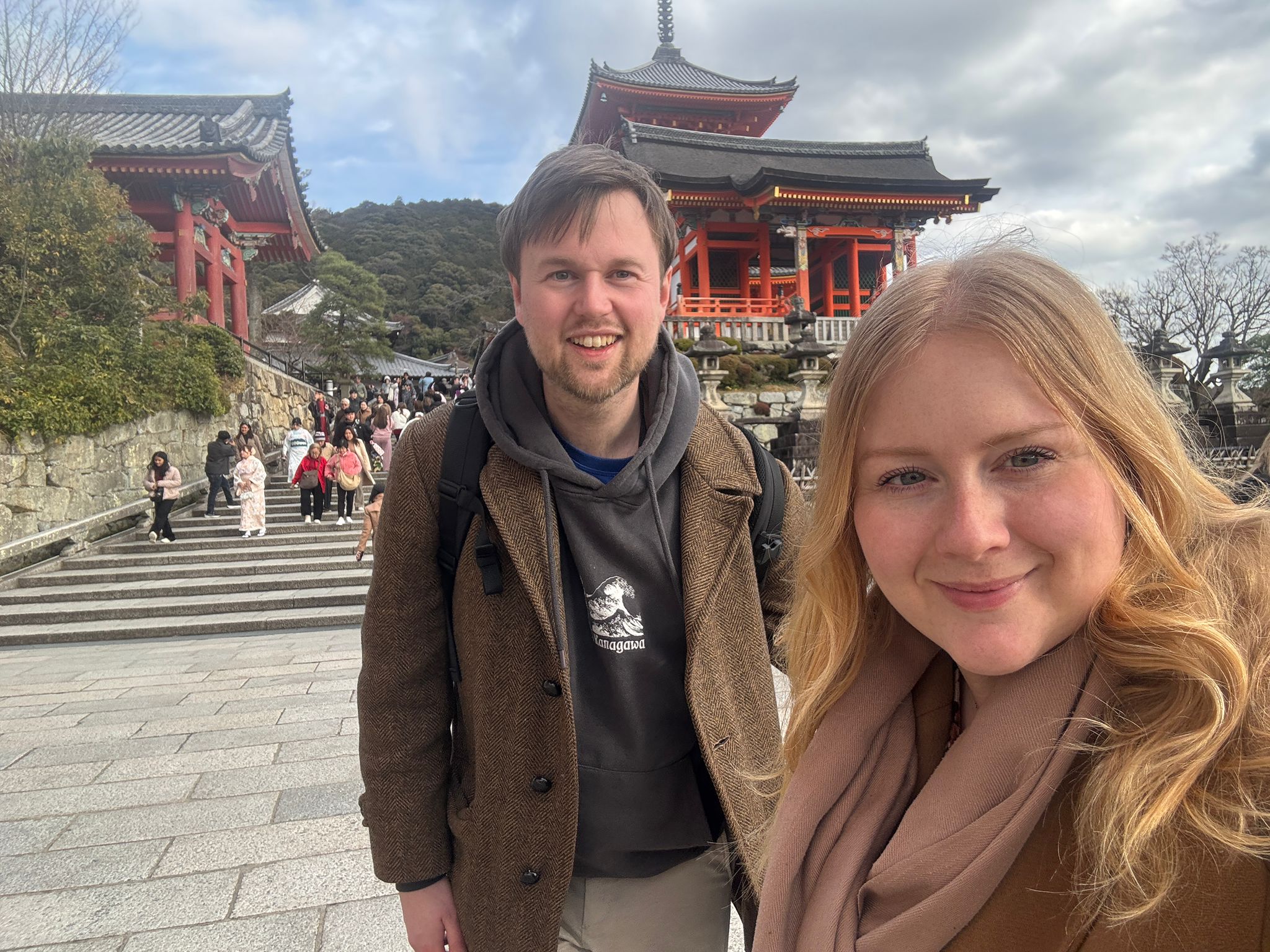
My name is Erik Thor, and I’m working hard on a new age of humanism and a more peaceful, prosocial world. Subscribe to my blog posts!
Share

Loading discussion…