I remember waking up in my early 20s, feeling like life had no meaning anymore. Then I asked myself why? Was it because I have lost touch with myself? Or was it because I lost touch with the world?
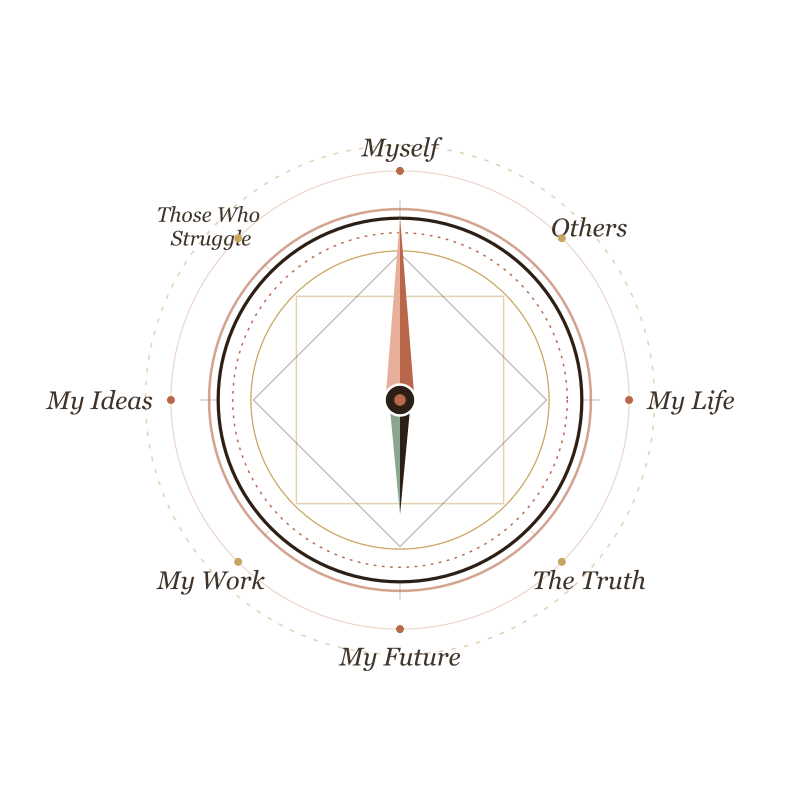
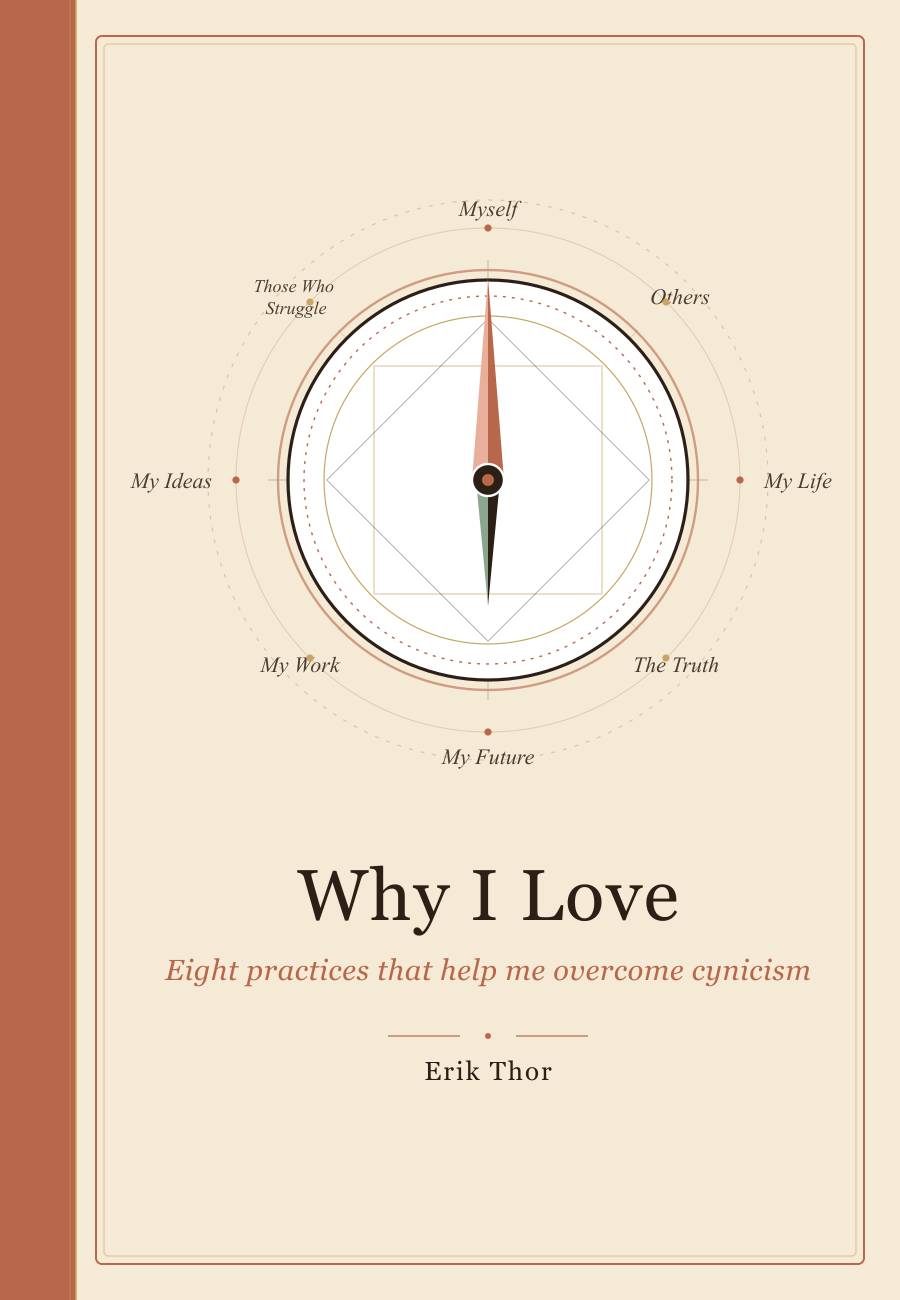
In my book, The Age of Self-Realization, I speak about the importance of finding your own inner compass. To find your own compass, you first need to remember who you are. Without knowing yourself, your compass has no center from which to point and orient itself.
Secondly, remember what you want from life. Without knowing your why and where you are going, your compass has no direction or aim. That’s why we need to have values. But how do we find values? Values are found in our relationships. We can’t have meaning without relationships.
A compass, you could say, is a relationship between yourself and the world. So if you wake up, feeling like life is meaningless, ask yourself: why do I feel this way? Is it because I have forgotten about myself? Or is it because I have forgotten about the world? Regardless of why, something has caused you to lose your relationship to life. Let’s talk about that.
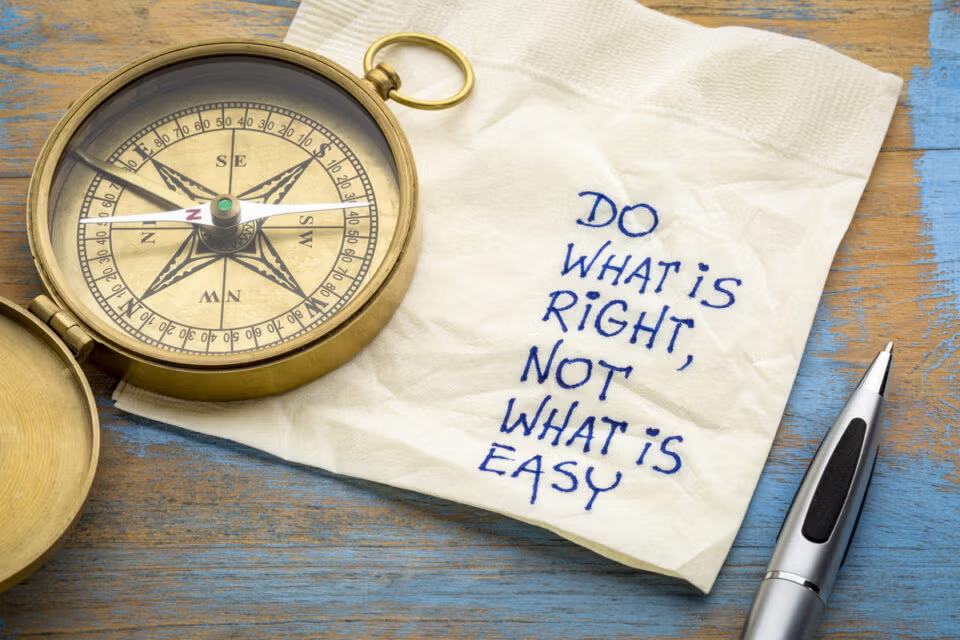
Signs you have lost touch with yourself
For me, a sign that I’ve lost touch with myself is that I’ve started living according to an external map. I have internalized others’ expectations of myself. I have started to live according to a script. I do what I do because I think I am required to by my boss, my colleagues, my friends, or my family. I think this is what you need to do to “be a man,” “become rich,” or “get views.”
I shut down my own feelings or refuse to look at myself or what is happening inside of me. I feel afraid of myself and my own unconscious thoughts. I repress my emotions and thoughts and judge them as dark, evil, or bad. At my worst, I feel a state of shame for being who I am, or worry that I’m somehow broken or wrong. I focus on showing a mask to the world, presenting a perfect surface to others. I rehearse conversations and actions beforehand. I never talk about my doubts and uncertainties with others. I stick to safe topics in friendships.
For me, the biggest sign that I’ve lost touch with myself is that I have acted outside of my morality. I’ve done something I know is wrong. I’ve lied, I’ve gone against my own values, I’ve done something I felt was wrong, but chose to disregard. I acted arrogantly towards a friend. I got in a fight, or let my own ego get in the way. I forgot about other people and became self-absorbed. Perhaps I saw someone being bullied and didn’t speak up. Why did I do it? One reason is that I wasn’t connected to myself. I wasn’t listening to how it tugged at my heart. I held back my voice. I was afraid to share how I really felt. Now, your compass doesn’t know where to point anymore. You have to retrace your footsteps. Remember who you are.
Signs that you’ve lost touch with the world
Do you feel like your friends are shallow and superficial? Is it hard to have deep and real conversations with others? That you’re better off alone? That there’s no good job for you in the world, no place for you, and that you don’t fit anywhere? These are signs you’ve lost touch with the world around you. Now, your compass doesn’t know where to point.
All this can lead you into an existential crisis. But the more common reason you lose touch with the world is that you stop talking to it. Imagine you ignore your friends, you don’t listen to your partner, you don’t take time to sit down with others, to hear them out, to know their struggles, to know their joys. You’re so focused on doing, doing, and doing, that you just don’t think about why it was being done in the first place, and if anyone really wanted it.
For example, I might get so caught up in the work that I pick up and resolve tickets without really understanding their requirements or why someone asked for them, or why it was important in the first place. It all leaves me feeling meaningless. I start to feel detached from my own work, I find it hard to get out of bed in the morning, and I don’t know why I show up or why I do what I do anymore. Now, your compass doesn’t know where to point anymore. Where are you going? You might know who you are— or who you think you are. But you don’t know why you’re here. It’s time to stop, listen, and pay attention.
How can you remember who you are?
If you’ve forgotten who you are, I think the first thing to do is to remember your roles. You might be a father, a son, you might have a job, you might have a legacy, you have roots, a place where you came from. All these things are noble things to be. You can already find a purpose just in recognizing who you are right now and learning to embrace these roles in your life. From this position, through your line of work, or through who you are today, what can you do for or offer the world? How can you live and practice your values through your roles?
Retrace your steps and start with where you are right now. Ask yourself how you got here. Take a moment to observe where you are currently standing. Try to describe the world around you as neutrally as possible.
Now: What steps led you down this path in the first place? Once again, as neutrally as possible, describe what route you took, no excuses, no rationalizations, simply describe your actions, exactly what you did, and what happened as a result of what you did. What you didn’t want to happen happened. What are you going to do about it now?
You may eventually find yourself looking at a situation you don’t want to remember. A time or place where you did something you feel is deeply wrong. Don’t avert your eyes. Look at what happened as neutrally as possible, and avoid assigning blame. Everything is a lesson. Everything is information. The more objective your view of yourself is, the deeper your relationship with yourself can be. Objectivity is not angry. Objectivity does not judge. Objectivity just sees with open eyes.
How can you reconnect with the world?
You might know who you are, but still, you may struggle to build a relationship with the world. What can you do when you have a bad relationship with others?
The truth is, the world has been trying to reach you for a long time. It’s been trying to give you a quest. It’s constantly trying to get a hold of you, by any means necessary. I don’t mean in an esoteric sense. I mean in the most raw way possible. All you need to do is learn to listen.
There’s a beggar on the street, asking for your help, there’s a friend that needs you to listen, there’s a colleague that is suffering alone and who needs support, and there’s a stranger that feels alone and who wants to connect with someone, just like you. Life is full of problems, also known as opportunities.
Most relationships start with us solving someone else’s problem. When somebody solves a problem for you, it makes you feel loved and cared for, and similarly, when you solve a problem for someone, that makes them feel loved and cared for by you. In this individualistic world, it’s so easy to become hyper-focused on your own problems, thinking you should solve them alone, isolating yourself from others, and your relationships start to suffer.
But what if I lose myself in others again?
You might worry that if you connect with others, you’ll lose touch with yourself, and that the only way to stay in touch with yourself is to disconnect or isolate yourself from others. What if you become so focused on pleasing the world that you stop pleasing yourself? What if you end up becoming a therapist to your friends? What if you become used to your colleagues?
We live in a world where most people identify as introverts because they feel relationships have become too draining, too much of a performance. I was the same way. I called myself an introvert because I was working too hard. Everyone is working too hard to present a perfect mask, to fit in, to please. It’s taxing, and it’s exhausting. Not because you’re an introvert, but because you’re unable to relax and be yourself around other people. You’re too busy thinking you need to be funny, interesting, helpful, and perfect when all you really need to do is be yourself.
This is why we need to return to the idea of a compass.
Your purpose in life is not simply to do what other people ask you to do.
Your purpose in life is to be who you are in such a way that allows you to be useful to other people and to the world.
You could say your purpose isn’t what other people want from you, but what you decide to do in order to help the world become a better place. A compass needs you to use yourself as a reference point, and the other to find a general direction. The path you need to take is determined by the distance between yourself and who you are, and the way you can help or connect with others. That’s why you need to remember who you are in your relationships. So that your relationships can remember who they are. So that you can all coexist in harmony and everyone can be their most authentic selves.
Thank you for reading.
If you want to read my coming book, the age of self-realization, subscribe to my newsletter and get a sneak preview for free!
Share

Loading discussion…