We live in an age of machines where individual humans are diagnosed, and made to mask who they are to fit in and contribute to the societal engine of production. But why is the problem the individual?
I’ve met several people this week, all with some form of diagnosis. It seems especially popular among the young. The psychological talk that used to be accessible only through academia or therapy is now easy currency on TikTok, Instagram, and other social media. It’s changed how we talk, with therapeutic jargon becoming normal everyday English, and diagnosis is the new Myers-Briggs Type Indicator. In this article, I want to reflect on what would happen if we stopped diagnosing individuals and started diagnosing our societies. Because I believe we have it the wrong way around.
We can’t look at the individual without looking at the environment. You can’t have ADHD without being considered through the lens of your living conditions, your school, your family, your social life, and your everyday experiences. Psychology, while an important tool, is just one lens to describe a person. If I’m a psychologist, and somebody comes in, unemployed, single, with no family, no friends, I could choose to look at that person through the lens of diagnosis.
As a psychologist, I might put the problem on you because I’m not in a position to do anything about your environment. I could say that it’s because of your ADHD, or BPD, or perhaps you’re on the autistic spectrum? But there are plenty of people with ADHD, BPD, and Autism, living, thriving, with plenty of friends, successful jobs, and loving family members, so how does my diagnosis answer your problem? What does it tell you? This reveals a fundamental problem with the practice of psychology.
Psychology is meant to be like traditional medicine, but for the soul
Psychology has long tried to emulate the Western view of medicine and the body, but applied to the human soul, our psyche. This view reduces the mind and your experiences to a machine. Your depression is caused by a lack of a vital neurotransmitter, and your ADHD is neurological… the answer to your problem is something to be resolved primarily through medication or individual interventions. This has led billions of people across the globe to chronically obsess about “what is wrong with them” while ignoring what is wrong with the world and our shared social reality. And it’s one reason why I chose to move away from traditional psychology and CBT toward humanist psychology, as advanced by Alfred Adler, Abraham Maslow, and Carl Rogers. Because they see what people can be if they are allowed to be for themselves, while traditional psychology focuses on how they should be for society.
While schools cut costs, class sizes grow larger, play decreases, and time on the bench increases, we’re mass-diagnosing children with “concentration issues”. If you are able to get a diagnosis, you might have the chance to get special support and extra teacher assistance. A diagnosis has become a way to cut in line and gain access to what should be a right for every child: the right to support and to learn in a quiet setting, with a teacher who can customize the lesson and the class to each person’s individual needs. This has led to a mass demand for diagnosis. In Sweden, 10,5% of boys aged 10-17 met the criteria for the diagnosis.
If a phenomenon is rare and affects only a small percentage of people, I think a diagnosis can be an effective way to support people with special needs or unique neurological variations, but if it affects as many as 10%, that’s a symptom of something else that needs to change. Now, we’ve got a sizeable minority at our hands. Can we really afford to treat this as an individual problem? Doesn’t it make more sense to intervene across the entire school system?
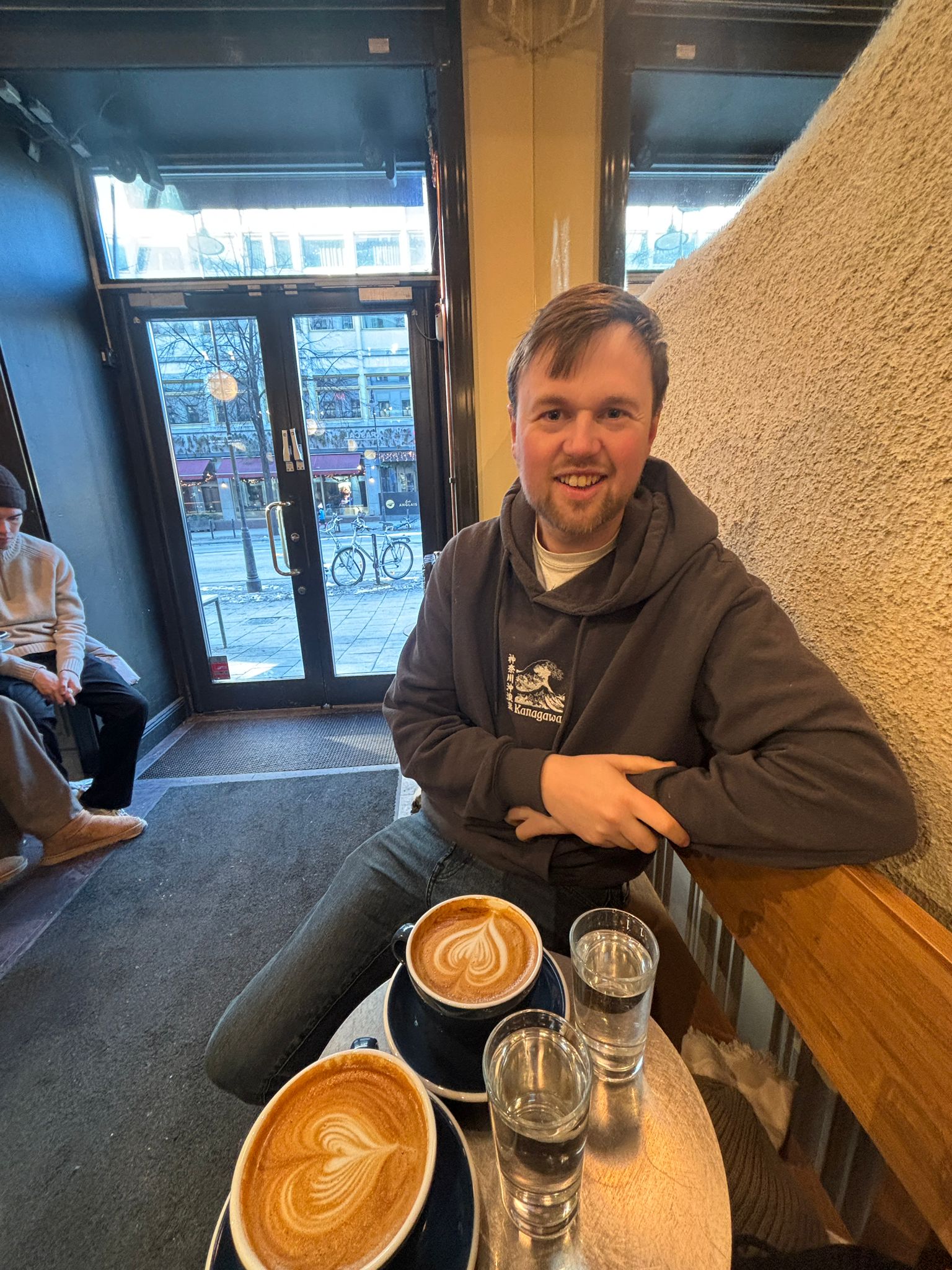
In my early 20s, I was obsessed with becoming a successful member of society until I drove myself to a burnout. After my burnout, I spent a lot of time getting to know myself. But I still struggled to align with the world around me, and often felt like a misfit. Now, in my mid 30s, I know myself very well; I spend more time getting to know my environment and creating the kind of environment where I, my friends, and loved ones will thrive.
We need an organismic view of the self
Instead of treating people as machines and breaking them down into parts, I think it makes more sense to take an organismic view of the individual.
With this in mind, a child is not the result of their individual genetic makeup, but a unique response, a seed that can only flourish under the right environmental conditions, and will require special care and attention to the soil. We can’t diagnose any problem with the sprout by simply looking at the sprout; we have to look at the soil, the environment, the classroom, the family dynamics, the friendships, the nutrition, and the sleep of a person to understand the child. We can’t just say “You produce too little serotonin” – we should instead identify which environmental factors might contribute to the serotonin underproduction. Because perhaps the brain is smart – and functioning correctly – and perhaps we’re just treating a symptom, not a problem?
I believe that every person, regardless of their genetic makeup, has the opportunity to contribute to the world in some way. But standardization is forcing all children to fit into very tight environmental conditions. Psychologist Jonathan Haidt explains that children today have less time for unsupervised play than ever before, with children glued to their seats, forced to sit still, and kept under tight supervision and control by overprotective family members and teachers. But when has this ever been human?
Instead of simply settling for what is normal, we should go one step deeper: what is natural? What is natural for a human child? DNA needs a trigger to activate. Only by being out in nature, only by playing, only by having proper time for rest, quiet, and time without social media and TV can the human brain develop properly. Humans need to be raised in the right conditions, with the right support and environment, to grow into healthy, competent adults.
And instead of trying to intervene and make individual humans fit according to what is currently normal, in today’s “age of machines”, we should ask ourselves how we can reshape our society to be a place where every person can live and thrive, just the way they are.
My name is Erik Thor. If you enjoy these types of articles, subscribe!
Share

Loading discussion…