Feeling: Human Values, Relational Harmony & Loving Beauty
Understanding your gift for empathy, emotional resonance, and appreciating the deep beauty of being human.
Why I Love · The Practice of Love
Feeling Is Love of Art & Beauty
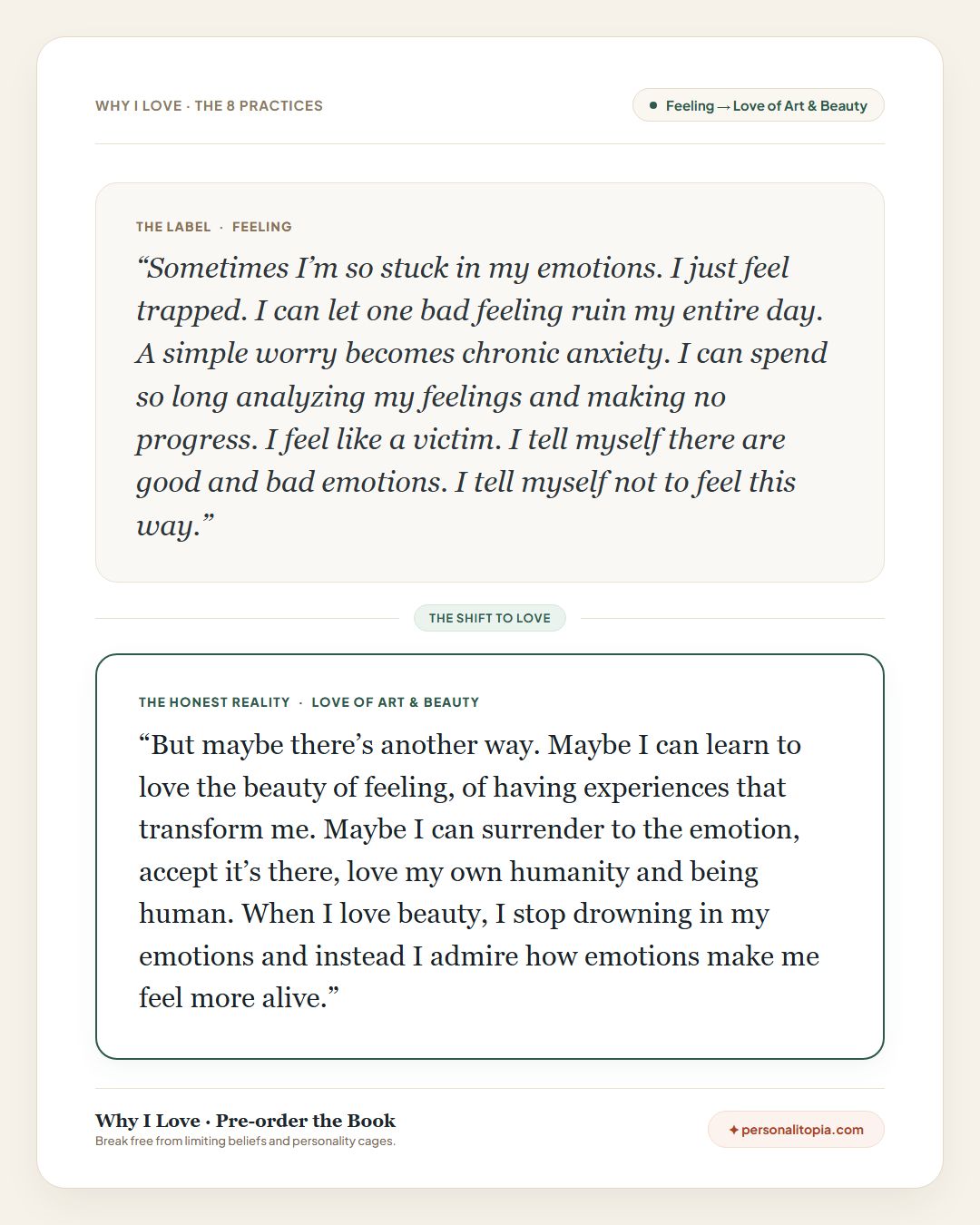
Sometimes I’m so stuck in my emotions. I just feel trapped. I can let one bad feeling ruin my entire day. A simple worry becomes chronic anxiety. I can spend so long analyzing my feelings and making no progress. I feel like a victim. I tell myself there are good and bad emotions. I tell myself not to feel this way.
But maybe there’s another way. Maybe I can learn to love the beauty of feeling, of having experiences that transform me. Maybe I can surrender to the emotion, accept it’s there, love my own humanity and being human. When I love beauty, I stop drowning in my emotions and instead I admire how emotions make me feel more alive.
What It Means
Feeling is your capacity for emotional sensitivity, ethical discernment, and deep empathy. When feeling is overwhelmed by fear or resistance, it is easy to feel victimized by your own emotional state—letting a single passing mood dictate your whole day, spiraling into rumination, or harshly judging yourself for feeling vulnerable. But feeling, in its true wisdom, is the practice of love of art and beauty.
“Feeling is learning to love the beauty of emotion—surrendering to the feeling rather than drowning in it, and honoring what makes us human.”
When you practice feeling with love and acceptance, you stop dividing emotions into good and bad camps. You realize that sadness, grief, joy, awe, and longing are all brushstrokes of the human soul. You bring emotional safety to those around you, listening with compassionate presence, standing up for human dignity, and creating spaces where people feel truly seen, accepted, and loved.
When this drive becomes unbalanced, you can take on everyone else’s distress until you are emotionally drained, or avoid necessary decisions because you fear temporary friction. Loving beauty means letting emotions move through you like music, finding reverence in the feeling, and acting from grounded moral courage.
Core Traits & Preferences
Feeling Match
Check off statements above to calculate your match score.
Your Personality in Context
At Work
In professional roles, your feeling orientation ensures that the human element is never lost. You advocate for ethical workplace culture, build authentic trust across teams, and ensure that projects serve real human needs with care and conscience.
In Relationships
In your personal relationships, you bring devotion, vulnerability, and gentle understanding. You pay attention to how your partner feels, nurture emotional closeness, and create an atmosphere where honesty and tenderness can thrive.
In Groups
In group settings, you are the relational glue that helps everyone feel valued. You notice if someone feels left out, bridge interpersonal tension with tact, and remind others of the shared human heart beneath conflicting opinions.
On Your Own
In solitary moments, you nourish yourself through creative expression, reflection, art, music, or nature. Connecting with beauty restores your emotional balance and keeps your heart open.
Four Cognitive Function Thought Patterns
Feeling expresses itself through four distinct cognitive function patterns.
1. The focus on authentic conscience (Introverted Feeling)
You look inward to stay true to your personal values, moral convictions, and core identity. You refuse to compromise what you know is right just to fit in.
“I reflect deeply to ensure my choices honor my personal conscience and authentic values.”
Learn more about Introverted Feeling
2. The focus on shared harmony (Extraverted Feeling)
You look outward to nurture communal bonds, cultivate emotional warmth, and ensure that everyone in the group feels welcomed, respected, and supported.
“I focus on bringing people together and creating an atmosphere of shared care and understanding.”
Learn more about Extraverted Feeling
3. Purpose-driven relationships (Feeling Judging)
You combine emotional care with structured commitment, planning ways to support loved ones and taking dependable responsibility for communal health.
“I dedicate myself to building steady, compassionate relationships that weather life together.”
Learn more about Feeling Judging
4. Spontaneous emotional expression (Feeling Perceiving)
You honor emotional spontaneity, responding with flexible warmth and welcoming authentic moments as they arise.
“I embrace genuine human expression, staying open to what the heart needs in the moment.”
Learn more about Feeling Perceiving
Journal Prompt
Where have you been judging your emotions or feeling trapped by them, and how would it feel to simply surrender, embrace your humanity, and love the beauty of feeling today?
Loading discussion…