A common sentence I hear from people around me is: “Erik, my intelligence makes me feel lonely.” When you believe you are more intelligent or more educated than the people in your room, it is easy to assume that your intellect is the wall keeping you apart. But when I look at modern friendships, I don’t see an intelligence problem. I see an expectations problem.
1. The Transactional Trap of Modern Friendships
People often tell me that they struggle to have normal conversations. They say: “When I talk about what matters to me, people look at me with blank eyes. When I make a witty joke, nobody laughs. Everyone around me only wants to talk about the weather, dinner, or kindergarten pickups.”
I understand that feeling of alienation. It is a very real ache. But I want to question the expectations behind it.
Somewhere along the way, we started treating friendship like a private book club or an intellectual sparring match. We look for playmates who can match our wits, introduce us to obscure theories, or dazzle us with new perspectives every single afternoon. When someone fails to do that—when they talk about their garden or their commute—we write them off as boring. We withdraw. And then we sit at home wondering why we have no close friends, or why everyone feels so superficial.
Friendship was never meant to be a competitive debate. When you meet another person, your goal is not to prove that you have read more books, earned a higher degree, or mastered a complex psychological theory.
The family model gives us a much clearer picture of what friendship is for at its best: kinship, safety, and a steady sense of community.
2. The Pressure to Perform
When you expect your friends to be brilliant, witty, and endlessly fascinating, you turn friendship into an audition.
Your friends feel that pressure immediately. They realize that to spend an evening with you, they have to be at the top of their game. They can only reach out when they have read something clever or thought of something groundbreaking. They do not feel welcome to just show up as tired, ordinary people with normal, everyday troubles.
This pressure runs both ways. You probably have people in your own life whom you avoid seeing because it feels like work. Every time you meet them, you leave feeling drained, because you spent two hours trying to be impressive.
Our culture treats intelligence as a hierarchy. It tells us that being a good companion means having the most fascinating stories, the fastest wit, and the most successful career. When you sit down with someone, you feel this urge to market yourself. You talk about how you met your partner, how you got your promotion, the big project you finished at work, or the stage you spoke on.
Those things belong to your resume. They belong to your past. They have very little to do with who you are right now, sitting in a chair across from someone.
Right now, you have real worries, real doubts, and real exhaustion that do not fit into a polished story. And that is where friendship begins: in your actual, unpolished life today.
3. Real Life Does Not Stop When You Are Tired
Friendship should not end the moment you feel drained, stressed, or bored. It should be a constant.
In practice, I see the opposite happen every day. When people go through a rough patch—when they face a divorce, lose a job, or struggle with depression—they hide. They stop answering calls. They pull away because they believe they have no right to be around others unless they can offer a bright smile and an inspiring conversation.
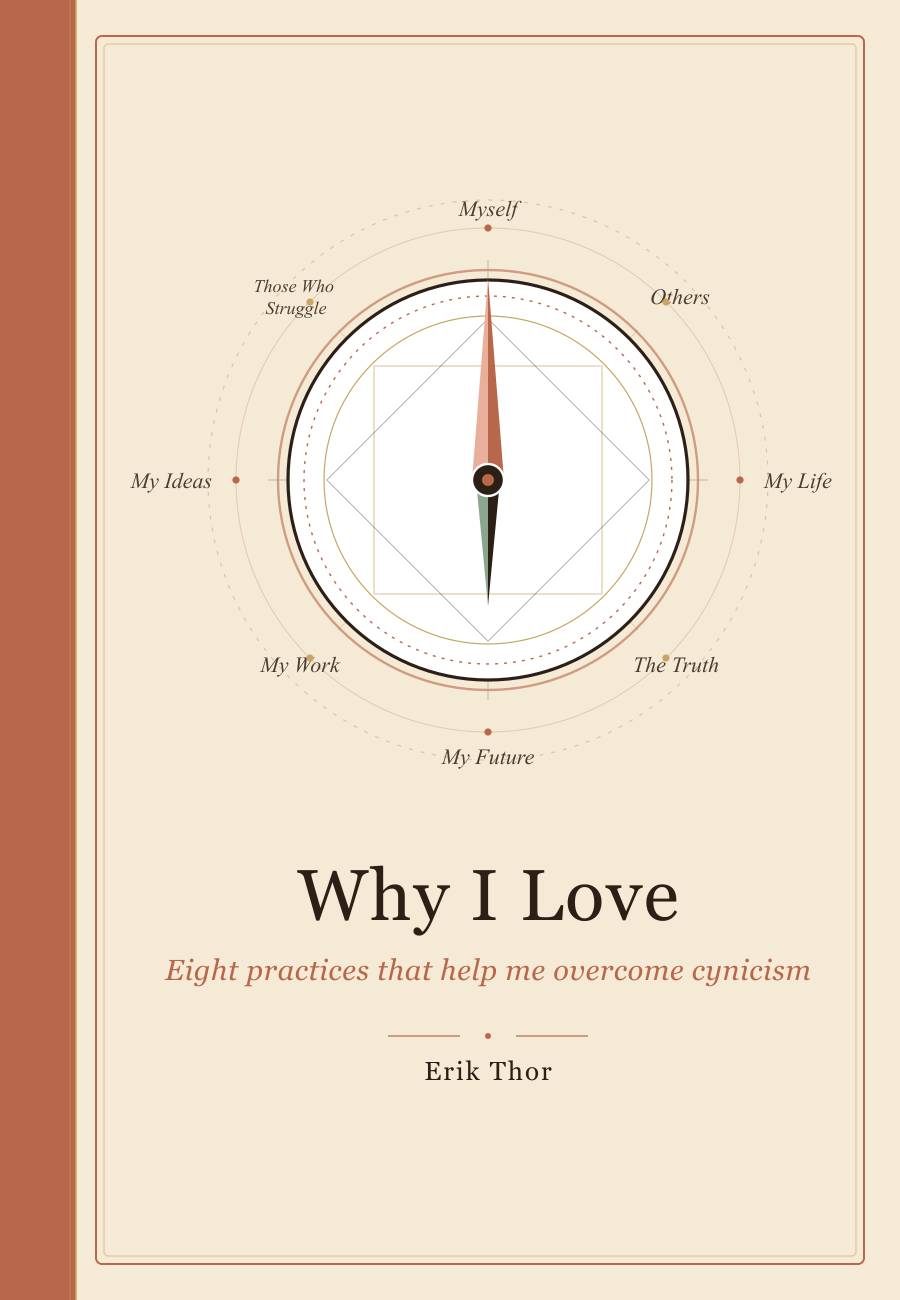
This is the exact opposite of what I write about in my book, Why I Love.
In the book, I talk about authentic connection and self-respect. Real connection is based on unconditional care. It means committing to be in someone’s life whether they are doing well at work or struggling to get out of bed, whether they made a wise decision or made a clumsy mistake.
When you know that a friend’s presence is not conditional on how smart or impressive you are today, you finally feel safe. And when you offer that same safety to others, they stop hiding from you.
4. The Freedom to Be Imperfect Together
If you want deeper friendships, drop the persona. Drop the image, the intellectual posturing, and the need to be seen as the brightest mind in the room.
When you are with a friend, there is only one priority that belongs in the room: mutual acceptance. You practice accepting the other person as they are right now, including their clumsy opinions and their bad days. In return, you allow yourself the exact same freedom.
You are allowed to say silly things. You are allowed to express a half-formed thought that turns out to be mistaken. Even the sharpest thinkers have said and done very foolish things throughout their lives. That is simply what it means to be human.
When you believe that your intelligence is what makes you lonely, look closely at what you are actually asking for. Often, it is not intellectual stimulation you want; it is validation. You want someone to say: “You are so smart. You are so brilliant.” You want an ego stroke.
You do not need an ego stroke. What you need is unconditional acceptance, whether you happen to be sharp or slow, wise or foolish on any given afternoon. When you stop treating friendship as a contest, the loneliness begins to take care of itself.
Reflecting on Your Social Expectations
Think about your closest connections or the conversations that leave you feeling tired. Where might you be demanding that either you or your friends perform, impress, or stay intellectually sharp? What would it look like to simply show up as you are today?
Share

Loading discussion…