I worry that we’ve lost the ability to really talk and listen to one another. Here’s how I think we could recover.
I think we all know the problem. We’ve lost ourselves in trenches. Algorithms have fragmented us into echo chambers. We only know how to attack, refute, and defend. Politics is described using metaphors of war, conflict, and winning vs losing. We get lost in labeling and describing the other from our own point of view. We seek people who are “like us,” and we separate ourselves from others. We’re too eager to take the moral high ground or to seek a position of superiority, and we lose ourselves in ego. I’m no different.
At some meetings at work, where I feel attacked, I can start to speak too reactively, acting to defend myself, or to shift blame away from myself. I fail to listen or understand where the other person is coming from. Only after the meeting, as I reflect, do I realize what the other person really meant. What if I could have taken even five seconds during that meeting to quiet my mind, to listen, and to try to understand the other person’s position, instead of instinctively telling them they are wrong, and jumping to excuse or explain my own behaviour?
I think about times when I would be angry at someone, and I’d spend hours in my own head, rationalizing why I’m right and why they are wrong. In my own head, I’ll start making up labels about the other person, calling them names, belittling them, describing them as “evil” or “selfish” or “bad”, without realizing that they, from their own position, were trying to do something good, and had good reasons, and intentions, to why they did what they did.
Why is it so hard to listen to other people?
I think we can all recognize that human relationships are hard. At the same time, we all know life is meaningless without relationships. You can’t define a word without relating it to other words. We need a place and a role relative to other people. We need other people to be where they are for us to be where we are.
Without your manager, you wouldn’t be able to be who you are today, and without your junior, you wouldn’t be where you are today, so how can you really describe people as “good or bad”? Why do you feel so frustrated with your partner for not being you, when you are able to be who you are today, because of who they are?
Problems – like a miscommunication- are never the fault of one individual, but the fault of two people, failing to relate to one another, failing to make agreements, failing to set shared responsibilities. Instead of trying to assign blame or prevent blame from falling onto yourself, why don’t you talk about what you both can do to improve the situation?
Still, I know why we do what we do. I know why this keeps happening. I think we all recognize the ideal way to handle relationships and conflicts, but sometimes, you just can’t help it. You feel alone. You feel misunderstood. When you feel alone, you lash out to defend yourself. Conflicts in relationships are not a sign of failure. The wounds and hurts you feel in a relationship can be where healing starts. Turn pain into purpose, as my fiancé would say. Use a conflict or misunderstanding in a relationship as an opportunity to talk and share. Don’t get caught up in guilt or blame; be willing to forgive yourself and the other person.
How I try to navigate conflicts at work and in relationships
I remember a time when a project fell apart completely at work, people were angry, and most came into the meeting with a tense chest. We were in for an hour of sweaty conversation. How could I steer the discussion in the right direction? I suggested that, as a neutral party, I could lead the discussion, and I prepared a format. I asked everyone to sit down and write down, on post-its, in a shared whiteboard, what went wrong, what could be better, and what they have learnt.
After fifteen minutes of writing, we took turns sharing. After an hour, everyone felt lighter and more understanding, and we were able to let go and move forward. I felt a lot better after that meeting, and I think it was a turning point for our team, where we were able to improve and connect more. This is an ideal for me in how I try to resolve issues.
I believe in transparency and honesty, but not the kind that attacks or condemns; the kind that shares how we feel and where we come from, without trying to ascribe feelings or labels to the other person. Your colleague isn’t lazy or stupid. You’re not lazy or stupid. Every person you meet is a lesson for you to learn, an opportunity to grow. Don’t try to ask for a new lesson: ask yourself what you have to learn in order to connect with this person.
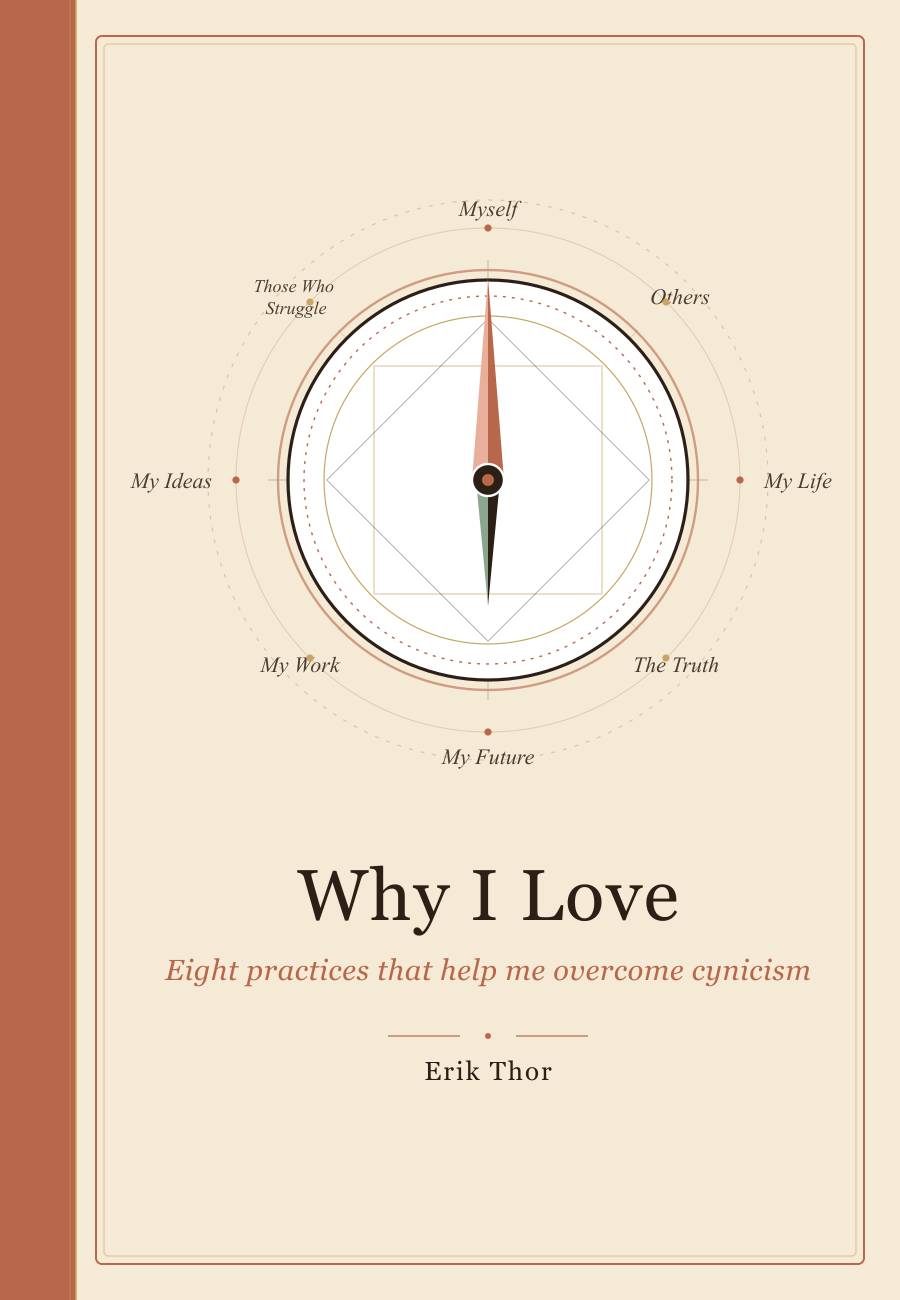
Most of all, I believe in working with gardening, architecture, and good conversations. I thought a lot about these topics when working on my book The Age of Self-Realization. To me, self-realization and relationships are key to meaning and a good life. If you want to read my upcoming book, subscribe to my newsletter!
Why I Started The Socratic Sessions
I remember reading Socrates dialogues as a teenager. I loved how he approached conversations. How he took every conversation as an opportunity to learn. His use of dialectics. Inspired by the Socrates Cafe in Barcelona and Amsterdam, I wanted to create a similar space in Uppsala.
The Socratic Sessions are a format where everyone can bring a question and share and engage in a philosophical conversation about a real-life problem or struggle. Anyone can propose a question. The discussion is moderated so that everyone gets a chance to speak. Instead of debating or attacking, we are encouraged to share from our own point of view and experiences, and how we feel about a certain topic. The struggle is getting the conversation to feel safe enough that people dare to reveal their innermost thoughts, the uncertainties, the doubts, the questions.
The challenge is that people so often get lost in sharing what they already know: trying to prove to the group how intelligent they are by quoting favorite philosophers and scientists, or by lecturing the group on a subject where they feel like an expert. I want people to feel like they can be there without needing to have any previous experience, and without feeling like they have to claw or fight for the word, and without feeling like they have to prove or defend themselves. You’re not here to prove anything. There will not be a performance review after our conversation.
If you try to lecture the group, you lose the chance to learn because you get stuck in what you already know. And you make other people feel inferior to you, or like they can’t share unless they have something “smart” to say in return. The goal for me is to get people to share what they don’t yet know – and what they’re still thinking or wondering about, because that’s where the learning happens.
If you attack people with whom you disagree, you lose the chance to learn or understand them from their own point of view. My goal is to get to know people, who they are, where they come from, and why they think the way that they do. If I attack or interrogate them, they’ll start to deflect from the really interesting parts of the conversation.
If you become defensive or start trying to explain or rationalize yourself, you lose the chance to see and understand yourself more deeply as you are, and to reframe your experiences. My bad habit is that I start justifying my own position or searching for arguments for why I’m right, instead of thinking about the situation or why I got there in the first place.
I can’t control what will happen, and I know that we are all human beings and that we ultimately bring ourselves as we feel and as we are right now, anxieties, fears, and insecurities we can’t help. We all co-create the spaces we live in and share together. When a conversation doesn’t go the way I wanted it to, or we start talking about a question I didn’t really want, I trust the process and recognize that this is an opportunity for me to learn as much as it is for everyone else. We will find our way forward from here. I’m curious: which meeting formats have you found work best for good conversations, and how do you go about creating great discussions?

Share

Loading discussion…