Extroversion: Stepping Out, Engaging Directly & Loving Others
Understanding your drive to connect, take action in the world, and build honest relationships without ego.
Why I Love · The Practice of Love
Extroversion Is Love of Others
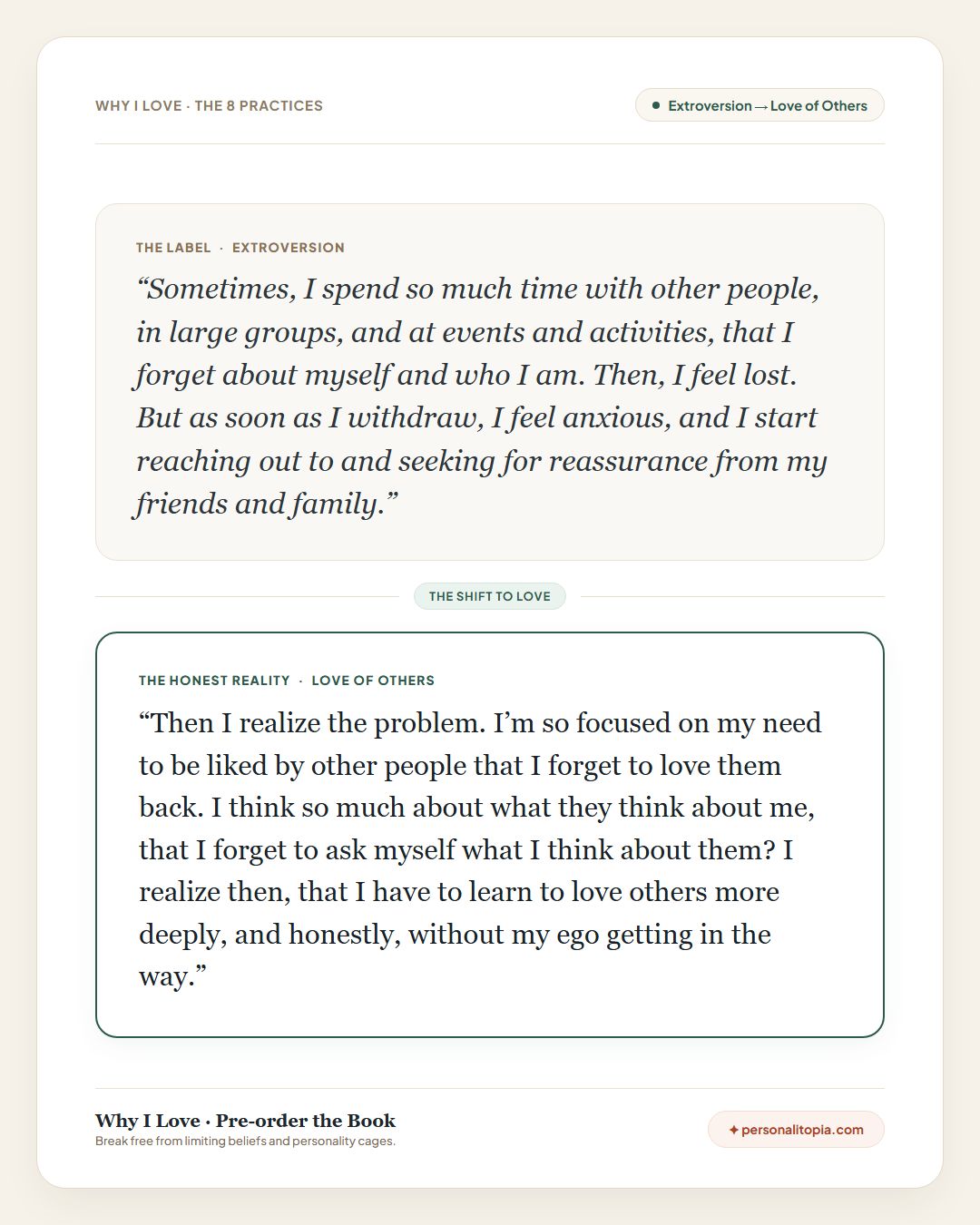
Sometimes, I spend so much time with other people, in large groups, and at events and activities, that I forget about myself and who I am. Then, I feel lost. But as soon as I withdraw, I feel anxious, and I start reaching out to and seeking for reassurance from my friends and family.
Then I realize the problem. I’m so focused on my need to be liked by other people that I forget to love them back. I think so much about what they think about me, that I forget to ask myself what I think about them? I realize then, that I have to learn to love others more deeply, and honestly, without my ego getting in the way.
What It Means
Extroversion is the practice of stepping outward into the world to connect and take action. It is easy to confuse extroversion with a constant craving for attention, social stimulation, or superficial popularity. But at its best, extroversion is a practice of genuine love of others—turning your attention outward with sincerity, curiosity, and care.
“Extroversion is the shift from asking ‘do they like me?’ to discovering how you can genuinely care for and support the people around you.”
When you direct your extroverted drive constructively, you do not just fill quiet rooms with chatter or seek reassurance from the crowd. You notice what others need, facilitate connections, launch collaborative efforts, and bring warmth to the space you enter. You put ideas into the open air where they can be tested and shaped by the community.
When this drive becomes unbalanced, you can get caught in people-pleasing, overcommitting to social events out of fear of missing out, or feeling anxious whenever you are alone. Loving others honestly means dropping the ego, letting people see who you are, and focusing on mutual respect rather than performance.
Core Traits u0026 Preferences
Extroversion Match
Check off statements above to calculate your match score.
Your Personality in Context
At Work
In professional environments, your extroverted drive makes you an active catalyst. You facilitate team communication, pitch ideas directly, and turn theoretical plans into collaborative action. You keep projects moving forward by ensuring everyone stays connected and aligned on the shared mission.
In Relationships
In your personal relationships, you express love through quality time, direct communication, and shared activities. You check in frequently, invite friends into your life, and create a warm, welcoming circle where people feel appreciated.
In Groups
In group settings, you bring social initiative and lively dialogue. You notice when the energy drops and help revitalize conversations, ensuring that discussions stay engaging, open, and collaborative.
On Your Own
When you are on your own, you benefit from channeling your active drive into constructive hobbies, creative crafts, or planning your next shared project. Grounding your outer action with quiet moments helps keep your energy steady.
Four Cognitive Function Thought Patterns
Extroversion expresses itself through four distinct cognitive pathways.
1. The drive for practical execution (Extraverted Thinking)
You focus on organizing resources, setting measurable benchmarks, and creating systems that produce reliable results. You prefer clear logistics, transparent standards, and actionable plans that move teams toward common goals.
“I look at practical reality and organize resources to make things work effectively.”
Learn more about Extraverted Thinking
2. The drive for communal harmony (Extraverted Feeling)
You focus on creating shared warmth, honoring emotional needs, and building consensus across the group. You notice what others are feeling and work to create environments where everyone feels safe, respected, and welcomed.
“I focus on bringing people together and creating an atmosphere of shared care and understanding.”
Learn more about Extraverted Feeling
3. The drive for exploring possibilities (Extraverted Intuition)
You focus on brainstorming fresh ideas, making unexpected connections between concepts, and inspiring others with new possibilities. You enjoy collaborative brainstorming where one idea sparks another.
“I look at what is happening around me and imagine all the potential pathways it could open.”
Learn more about Extraverted Intuition
4. The drive for real-time engagement (Extraverted Sensing)
You focus on direct sensory experience, responding immediately to the environment, and engaging hands-on with the physical world. You enjoy dynamic activities and adapt with agility as circumstances unfold.
“I engage directly with the moment, staying responsive to the world right in front of me.”
Learn more about Extraverted Sensing
Journal Prompt
When you find yourself seeking reassurance from others, what would it look like to turn that attention into genuinely asking what they need from you today?
Loading discussion…