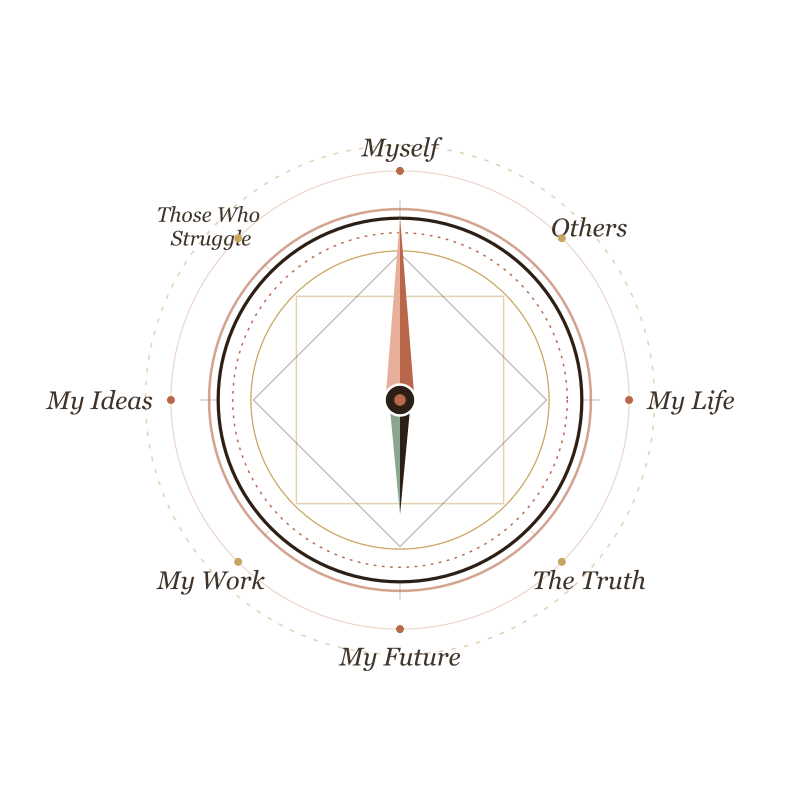
When artificial intelligence first became capable of writing essays, composing music, and generating images, I watched many creators sink into despair. It felt as though human craft had been made obsolete overnight. But seeing an algorithm produce work so quickly made me realize something fundamental: imitation is not originality. Only a human can live through an experience, and only lived experience can produce something truly original.
1. The Two Paths We Face
When new technology shifts the ground beneath our feet, we are usually presented with two very different responses.
The first response is the dark path. It is the temptation to become lazy, passive, and intellectually numb. You look at an artificial intelligence that can write a thousand words in three seconds, and you tell yourself: “Why should I bother learning to write? Why should I practice painting, or spend years mastering an instrument, when a machine can simulate it instantly?” You sink deeper into the couch, let algorithms feed you entertainment, and let machines do your thinking for you.
The second response is the opposite. It is the reaction I had when I first sat down and tested what these models could do.
Instead of making me want to give up, it made me stand up. It made me say: “I don’t want to sit on my hands. I want to go out and do something that matters.” It challenged me to ask what human intelligence actually is, and what I am capable of doing that no neural network trained on statistical averages can ever duplicate.
2. Imitation Is Not Lived Experience
I have spoken with many artists and writers over the last two years. Many of them told me that artificial intelligence made them depressed. They felt that their lifelong craft had been reduced to a parlor trick.
Other creators had the opposite reaction. It lit a fire under them. It forced them to get off the sofa, pick up the notebook, and say: “I am not going to surrender my voice. I am going to show that my perspective is still necessary.”
An algorithm can generate fluent sentences because it has ingested billions of sentences written by human beings. But an algorithm does not have a body. It does not feel physical exhaustion after a long walk in the rain. It does not know the private shame of hurting someone it cares about, the ache of grief, or the quiet relief of forgiving an old enemy.
Everything an artificial intelligence writes is an approximation based on the past. Human originality does not come from combining syllables into plausible sentences. It comes from having skin in the game—from being alive in a fragile body, making decisions that carry real consequences, and reporting honestly on what you found.
3. Human Intelligence Has Not Reached Its Ceiling
Most public debates treat artificial intelligence as if its potential is limitless, while treating human intelligence as if it is a fixed, finished product. We assume machines will get exponentially smarter every year, while human beings are stuck with the same flaws, cognitive biases, and limited attention spans forever.
I don’t believe that for a second.
If there is an upper limit to human intelligence, reasoning, and creativity, we are nowhere near it. Human beings have only existed in interconnected, literate societies for a tiny sliver of our history. We have barely begun to develop our capacity for emotional intelligence, self-awareness, and mature collaboration.
Think about the scale of what we can create today compared to a hundred years ago. Today, a writer in Sweden can share an idea with a reader in Japan in three seconds. We can synthesize perspectives across cultures, disciplines, and generations in ways that no philosopher in the nineteenth century could have dreamed of. Our ability to communicate has expanded our collective intelligence, not shrunk it.
4. Why I Sat Down to Write
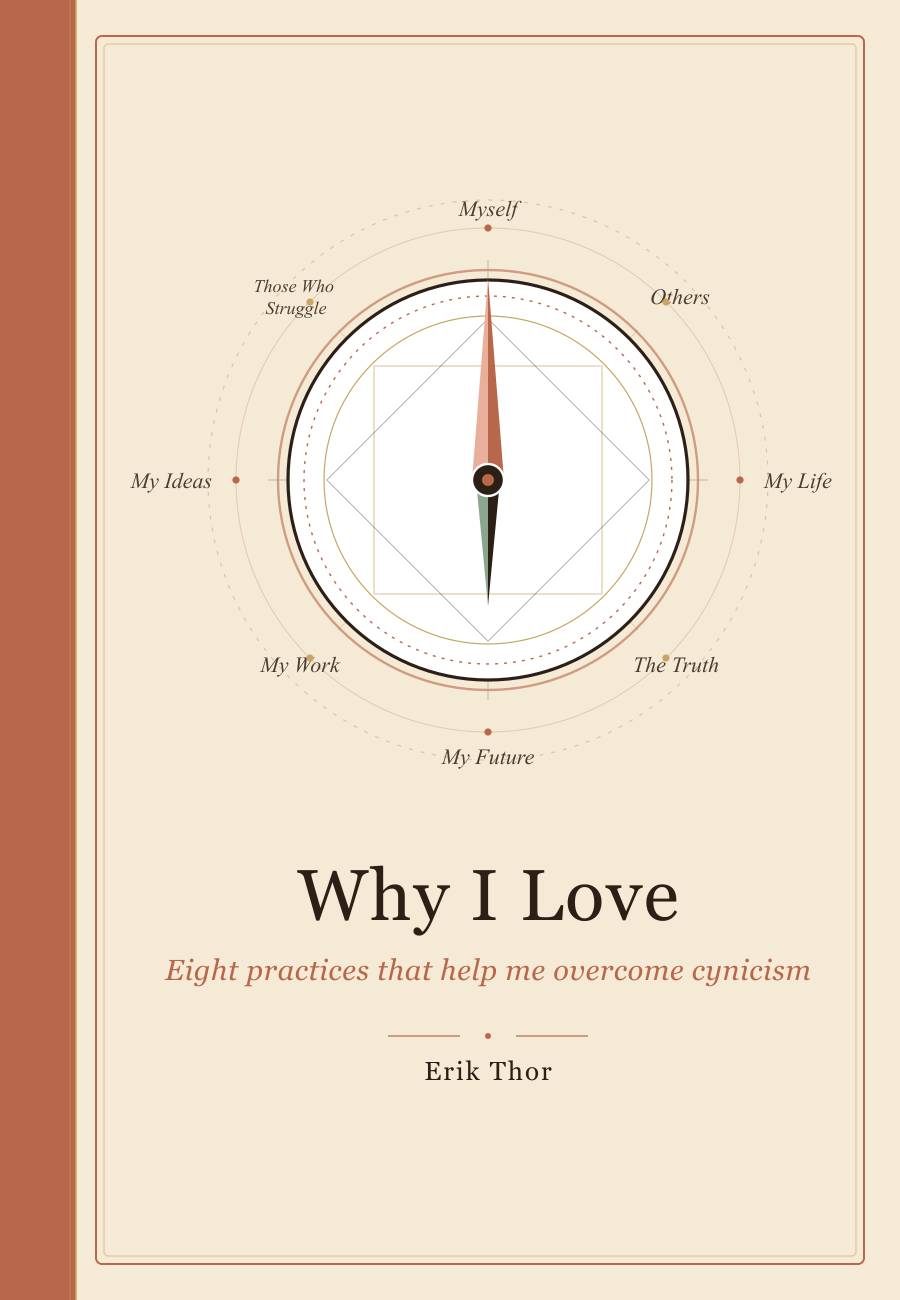
That realization was the direct catalyst for my book, Why I Love.
I wanted to write a book about human intelligence—not about raw processing power or memorizing facts, but about character, empathy, wisdom, and emotional maturity. I wanted to explore what happens when we stop hiding behind masks and begin living with integrity.
Artificial intelligence does not make human creativity irrelevant. It raises the bar. It clears away the routine, mechanical busywork and leaves us with the only question that truly matters: What do you have to say that is genuinely yours?
Do not let technology become an excuse for intellectual laziness. Sit down with your notebook. Ask yourself what you are capable of that you have not attempted yet. Show the world what human creativity looks like when someone cares enough to do the work.
Exploring Your Creative Edge
When you look at your own creative work, where have you been holding back or assuming you have reached your limit? What is one project, idea, or honest reflection only you could bring into the world right now?
Share

Loading discussion…